
Blooming
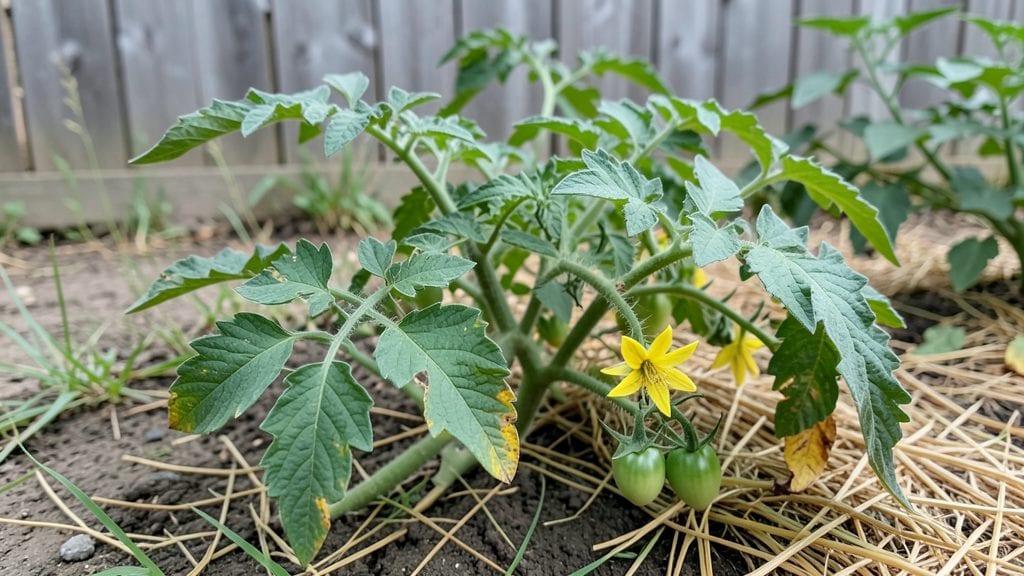
Tomato plants blooming early often signal stress or environmental mismatches, like inconsistent watering, heat spikes, or insufficient light. This can weaken fruit production, but adjusting care—such as providing shade, stabilizing moisture, and balancing nutrients—can restore healthy growth and stronger yields.
When tomatoes start flowering too soon, it’s often your plant’s way of saying, "Something’s off!" 🌡️ Extreme temperature swings—like hot afternoons followed by chilly nights—can trick the plant into thinking it’s time to fruit, even though the season isn’t right.
Even minor light deprivation, such as partial shade from nearby structures, sends mixed signals to the plant’s growth hormones, forcing an early bloom cycle. This disrupts the natural balance, leaving you with weak stems and underdeveloped fruit later in the season.
💡 In This Article
- Environmental Triggers for Early Tomato Blooms
- How to Adjust Care for Late-Season Fruit Success
Environmental triggers for early tomato blooms
Here's what's actually happening when your tomato plants throw their first flowers too soon: the plant's natural growth cycle gets hijacked by environmental chaos. Tomatoes rely on precise temperature cues to transition from vegetative growth (leaf production) to reproductive growth (flowering).
When daytime temperatures spike above 85°F followed by nights dipping below 55°F, the plant perceives these swings as a signal to "hurry up and fruit" before conditions become unfavorable.
This temperature mismatch disrupts the plant's internal clock, triggering premature flowering through hormonal shifts—particularly increased production of ethylene and gibberellins, which accelerate the blooming process.
The science gets even more interesting when you consider light deprivation. Tomatoes need 6-8 hours of direct sunlight daily to maintain proper growth hormone balance. When they receive less—like when shaded by structures or other plants—photosynthesis slows, and the plant compensates by redirecting energy toward reproductive growth.
This explains why container-grown tomatoes often bloom early: their root systems can't keep up with the plant's needs, creating a stress response that triggers flowering.
Think of it like a student cramming for finals when they realize time is running out—the plant panics and flowers prematurely to "get it over with."
Nutrient imbalances play a surprising role too. While nitrogen is essential for leafy growth, excess nitrogen in the soil (often from over-fertilizing) creates lush foliage but weak stems.
When the plant finally gets the right conditions to flower, those stems can't support the weight of developing fruit, leading to early blooms that often drop off. The key hormonal player here is auxin, which regulates cell elongation.
Too much nitrogen disrupts auxin distribution, sending mixed signals that force early flowering while weakening structural support.
What most gardeners don't realize is how these factors compound. A plant experiencing heat stress (above 90°F) while also being nitrogen-rich will show dramatic early blooming—sometimes within 3-4 weeks of transplanting.
The visual clues are telling: flowers appear on smaller leaves, stems are thin, and the plant looks "leggy" rather than stocky. This isn't just about timing—it's about the plant's entire structural integrity being compromised by environmental mismatches.
Let's talk about the hormonal cascade specifically. When tomatoes experience stress, they produce more ethylene, a gas that triggers flowering and fruit development. Normally, ethylene builds gradually as the plant matures, but stress causes a sudden spike.
Meanwhile, gibberellins—hormones that promote stem elongation—get overproduced in response to heat or light deprivation. Together, these create a perfect storm for premature blooming. The result? Flowers that appear too early, often followed by weak fruit that struggles to ripen properly.
Consider this real-world example: In Zone 8 gardens during heatwaves, tomatoes can bloom within 45 days of transplanting—half the usual time.
The fruit that develops from these early flowers often stays small (under 2 inches) and lacks the sweetness of properly seasoned tomatoes because the plant's energy was diverted prematurely.
This explains why some gardeners swear their tomatoes taste "blah" in hot summers—the plant simply didn't have time to develop proper flavor compounds.
The good news? Understanding these triggers gives you the power to intervene. By stabilizing temperatures, ensuring full sun exposure, and balancing nutrients, you can reset your plant's growth cycle. The key is consistency—tomatoes thrive on predictability, not surprises. 🌱