
Watering
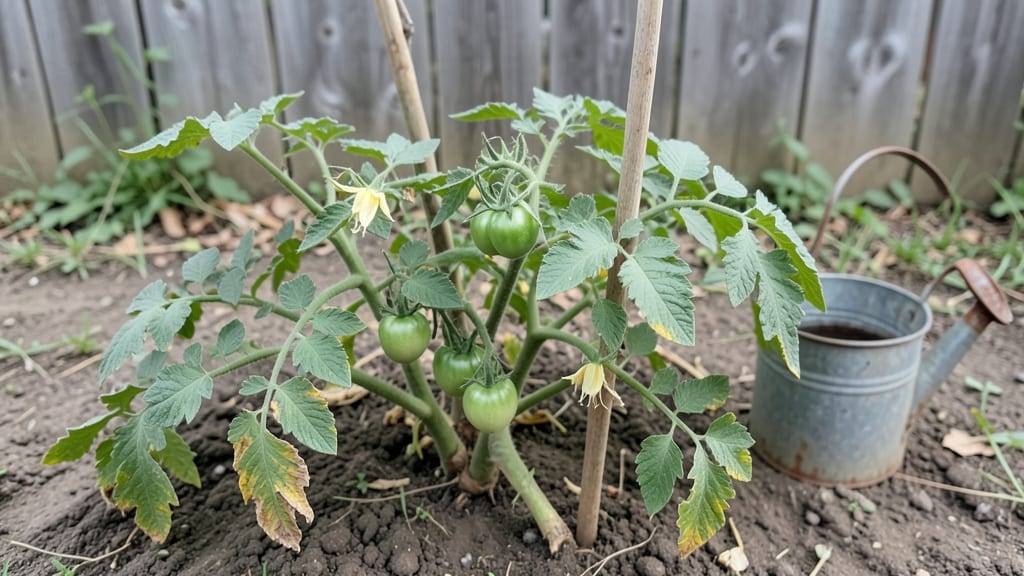
Underwatering tomato plants turns lush vines into sad, droopy messes faster than you think. 🌱 I’ve seen my own tomatoes go from thriving to struggling in just a few hot afternoons—dry soil, crispy leaves, and fruit that cracks before it ripens.
The good news? You can bring them back with the right moves.
The first clue is always the soil—stick your finger in 2 inches deep. If it feels dry, you’re already behind. Tomatoes need 1-2 inches of water per week, but how you deliver it matters just as much.
Drip irrigation keeps roots happy, while overhead watering can waste half the moisture to evaporation. Mulch helps too—it locks in that moisture like a cozy blanket for your plants.
Within 24-48 hours of proper watering, you’ll see leaves perk up and new growth push out. The key is consistency: water deeply every 2-3 days rather than light sprinkles daily.
Your tomatoes will reward you with firm, glossy leaves and heavy fruit clusters by midseason. Let’s get those plants drinking right.
This works for container tomatoes too—just check soil moisture more often. The same rules apply whether you’re growing in the ground or on your patio. Once you master this, your plants will stay vibrant even during dry spells. Here’s exactly how to do it.
Root Causes of Tomato Thirst
Underwatering tomato plants isn’t just about forgetting to water—it’s often a mix of overlooked factors that disrupt their delicate water balance. Let’s dig into the science behind why your tomatoes might be begging for hydration.
Tomatoes thrive in consistently moist (but not soggy) soil, yet many gardeners unknowingly create dry pockets where roots struggle to access water. Here’s why:
- Poor Soil Structure: Heavy clay or compacted soil repels water, trapping air pockets that prevent roots from absorbing moisture.
💡 Pro Tip: Amend soil with compost or coconut coir to improve aeration and water retention.
- Shallow Root Systems: Young tomato plants or those in containers develop shallow roots if watered inconsistently. Without deep roots, they can’t access moisture from lower soil layers during dry spells.
- Evaporation Overload: Sandy or loose soils drain water too quickly, especially in hot climates. A single watering session may evaporate within hours, leaving roots parched.
Actionable Fix: Test soil moisture 2–3 inches deep with your finger. If it’s dry, water deeply until it’s damp (not puddled) at the root zone.
Even well-intentioned watering can backfire if done incorrectly. Common pitfalls include:
- Surface-Level Watering: Light sprinkles or shallow watering only wet the top inch of soil, encouraging roots to stay near the surface—where they’re exposed to evaporation and heat stress. - Inconsistent Scheduling: Skipping watering days or relying on rain alone leads to fluctuating moisture levels.
Tomatoes prefer 1–1.5 inches of water per week, delivered consistently. - Wrong Time of Day: Watering in the heat (especially midday) causes rapid evaporation. Early morning (before 9 AM) is ideal—it gives roots time to absorb moisture before the sun intensifies.
Actionable Fix: Use drip irrigation or soaker hoses to deliver water slowly at the base of plants. Avoid overhead sprinklers, which waste water and promote fungal diseases.
Tomatoes don’t just suffer from lack of water—they’re also battling their surroundings. Heat, wind, and even container size can worsen dehydration.
- Extreme Heat: High temperatures increase transpiration (water loss through leaves) at a rate tomatoes can’t keep up with. Wilting leaves are often a cry for help in scorching afternoons.
- Strong Winds: Wind desiccates leaves faster, forcing plants to lose moisture before they can replenish it.
🌡️ Pro Tip: Use windbreaks or mulch to reduce moisture loss.
- Container Constraints: Potted tomatoes dry out 3x faster than in-ground plants because their roots have less soil to draw from. Small containers exacerbate the problem.
Actionable Fix: Mulch with straw or wood chips to retain soil moisture and reduce temperature swings. For containers, choose 5-gallon pots minimum and water more frequently.
Sometimes, the problem isn’t you—it’s the plant itself. Tomato stress signals can mimic underwatering, even when soil is moist.
- Root Damage: Overwatering (then drying out) or root-bound plants develop weak root systems that can’t absorb water efficiently, mimicking thirst.
- Disease or Pests: Fungal infections (like early blight) or pests (e.g., aphids) disrupt the plant’s ability to take up water, causing wilting despite adequate soil moisture.
- Over-Fertilization: Too much nitrogen or salt buildup in soil can "burn" roots, reducing their ability to absorb water.
✨ Pro Tip: Flush soil with water if you suspect fertilizer buildup.
Actionable Fix: Check roots for rot or pests. If soil is compacted, gently loosen it with a fork to encourage new root growth.
Let’s face it—sometimes we just mess up. Common oversights include:
- Ignoring Weather Changes: A sudden heatwave or drought can outpace your watering routine. Tomatoes in full sun need more frequent watering than shaded plants. - Over-Reliance on Rain: Even heavy rain can pool on hardpan soil, leaving lower roots dry.
Always check soil moisture post-rain. - Neglecting Mature Plants: Young seedlings need less water than fruiting tomatoes. As plants grow, their water demands double or triple.
Actionable Fix: Keep a watering journal to track frequency and adjust based on plant size, weather, and soil type.
Quick Fixes for Stressed Tomatoes
Reviving underwatered tomato plants starts with immediate action—but the right approach depends on why they’re thirsty. Below, we’ve mapped the most common causes to practical, step-by-step solutions, plus long-term prevention to keep your plants thriving. 🌱💦
Cause: Deep drought stress—roots can’t absorb enough water, and cells collapse. Fix in 3 Steps:
- 💦 Deep Watering Rescue - When: Right now—don’t wait for evening. Severely wilted plants need emergency hydration. - How: Use a soaker hose or drip irrigation to deliver 1–1.5 inches of water directly to the soil (not leaves).
Focus on the root zone (6–12 inches from the stem). - Pro Tip: 💡 Check soil moisture 1 inch below the surface with your finger. If it’s dry, keep watering in 10-minute bursts until water runs out the drainage holes.
- 🌡️ Post-Watering Recovery Care - Mulch ASAP: Spread 2–3 inches of organic mulch (straw, wood chips) around the base to lock in moisture and cool roots. - Prune Damaged Foliage: Snip off yellow or brown leaves (but leave green ones—they’re photosynthesizing!).
Use sterilized scissors to avoid disease. ✂️ - Shade Relief: If temps are above 90°F (32°C), drape a light shade cloth over plants for 2–3 days to reduce stress.
- 🌱 Root Boost (Optional but Helpful)
- Mix 1 tbsp of seaweed extract or compost tea into your watering can to jumpstart root recovery. This adds hormones that encourage cell repair.
Prevention for Next Time: ✅ Water at the base—never overhead (fungus risk + evaporation). ✅ Install a moisture meter ($10–$15) to track soil hydration daily. ✅ Group tomatoes with thirsty pals (peppers, basil) to create a microclimate that retains moisture.
Cause: Mild dehydration—roots are struggling but not yet dead. Fix in 2 Steps:
- 👨🍳 Adjust Your Watering Schedule - Morning Watering Wins: Tomatoes need 1–1.5 inches per week (more in heat). Water deeply in the morning so roots absorb moisture before evaporation. - Test the Soil: Stick your finger 2 inches deep.
If dry, water; if damp, wait. 🌡️ - Upgrade Your Setup: If using a hose, switch to a drip system or self-watering planter to deliver consistent moisture.
- 🥘 Soil & Drainage Check
- Aerate Compacted Soil: If water pools on top, roots can’t breathe. Loosen soil with a fork or add perlite/sand to improve drainage.
- Avoid Over-Fertilizing: Too much nitrogen = soft, weak roots. Use a balanced 10-10-10 fertilizer sparingly.
Prevention for Next Time: ✅ Use a rain gauge near your garden to track weekly rainfall. ✅ Plant in raised beds for better drainage and root access. ✅ Mulch heavily (4+ inches) to reduce evaporation.
Cause: Overwatering after drought (common when reviving plants!) or poor drainage. Fix in 3 Steps:
- 🚨 Stop Watering Immediately
- Let soil dry out for 24–48 hours to prevent root rot. Check if the problem is overwatering (soggy soil) vs. underwatering (dry soil).
- 🌿 Revive with Root Hormones
- Trim dead roots with clean scissors, then soak remaining roots in hydrogen peroxide (3%) for 10 minutes to kill pathogens.
- Repot or Transplant: Move the plant to a fresh pot with well-draining soil (50% potting mix + 50% perlite/coco coir).
- 🌱 Recovery Mode
- Water lightly (just enough to keep soil moist, not soggy) for 1 week.
- Add mycorrhizal fungi (like Root Shield) to strengthen roots naturally.
Prevention for Next Time: ✅ Always use pots with drainage holes—no exceptions! ✅ Test soil drainage by filling a pot with water. If it drains in <30 minutes, you’re good. ✅ Space plants properly to improve airflow and reduce humidity-related rot.
Tomatoes are 95% water—treat them like a thirsty teenager (consistent, not sporadic).
Use this cheat sheet: | Weather | Watering Goal | Frequency | |-------------------|---------------------------------|------------------------| | Cool (<70°F) | 1 inch/week | Every 5–7 days | | Warm (70–85°F) | 1.5 inches/week | Every 3–4 days | | Hot (>85°F) | 2 inches/week + shade | Daily (morning only) | | Drought | 2.5 inches/week + mulch | Every 2 days |
Final Pro Tip: 🎯 Observe your plants daily—if leaves fold inward (like a turtle shell), they’re begging for water. Act fast!
Frequently asked questions
How often should I water tomato plants to prevent underwatering?
Tomatoes need 1–2 inches of water per week, but frequency depends on weather. In hot climates, water every 2–3 days in the morning, while cooler weather allows every 5–7 days. Always check soil moisture 2 inches deep—if dry, water deeply until moisture reaches the root zone.
What are the first signs my tomato plants are thirsty?
Watch for wilting leaves (especially in the afternoon), yellowing lower leaves, or dry, cracked soil. Young plants may show crispy leaf edges, while mature ones might drop blossoms or fruit. Stick your finger in the soil—if it’s dry past 1 inch, they need water immediately.
Can I fix underwatered tomato plants if they’re already wilting?
Yes! Give them a deep watering rescue using a soaker hose until water runs out the drainage holes. Mulch heavily with straw to retain moisture, and prune damaged leaves. Most plants recover within 24–48 hours if roots aren’t permanently damaged. For severe cases, add seaweed extract to boost recovery.
Why do my container-grown tomatoes dry out faster than in-ground plants?
Containers have limited soil volume, so they dry out 3x faster than garden beds. Use pots with 5+ gallons of soil, water daily in heat, and add moisture-retaining granules (like hydrogel crystals). Check soil moisture morning and evening—containers can’t store water like the ground.
Is it better to water tomato plants overhead or at the base?
Always water at the base to prevent fungal diseases (like blight) and reduce evaporation. Overhead watering wastes 50% of water to evaporation and can scorch leaves in sunlight. Use drip irrigation or a watering can directed at the soil for best results.