
Planting
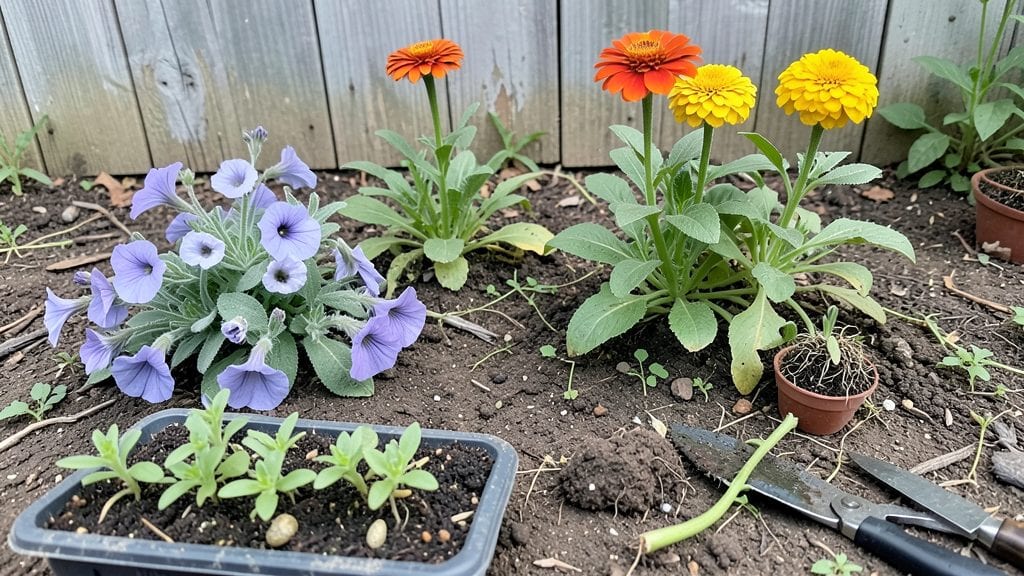
Planting flowers in Philadelphia depends on the type: cool-season blooms like pansies thrive when planted in early spring (March-April) or late fall (September-October), while warm-season favorites such as petunias and marigolds should go in after the last frost (mid-May). Always check the local frost-free date to avoid damage from late spring freezes.
Timing matters because Philadelphia’s unpredictable weather can turn a thriving garden into a frost-killed disaster if you’re off by even a few weeks. 🌱 The city’s urban heat islands often create microclimates where sidewalks stay warmer than backyards, so I always cross-check the USDA Zone 7a/7b guidelines with local weather reports—especially when planting heat-sensitive varieties like impatiens, which wilt if exposed to late frosts.
For example, while marigolds might survive a brief chill, their vibrant blooms will fade if planted too early. That’s why I recommend waiting until mid-May for warm-season stars, but starting cool-season work in September gives pansies time to establish roots before winter’s first frost hits around November 15.
A little patience now means months of uninterrupted color later!
💡 In This Article
- Philadelphia’s Frost Dates and Microclimates
- Best Flower Varieties for Philadelphia Seasons
Philadelphia’s frost dates and microclimates
Philadelphia’s frost patterns create a delicate window for planting, where timing can mean the difference between vibrant blooms and wilted disappointment. The average first spring frost occurs around April 15, while the last frost typically arrives by November 15.
This 7-month frost-free period defines when most flowers can thrive, but urban heat islands—where concrete and asphalt absorb and radiate heat—can create microclimates that are 3-5°F warmer than surrounding areas, extending the growing season by 1-2 weeks in city centers.
The USDA designates Philadelphia as Zone 7a/7b, meaning average minimum temperatures range from -5°F to 10°F. However, elevation plays a role too: areas like Wissahickon Valley experience cooler temperatures due to higher elevation, while low-lying spots near the Schuylkill River may stay warmer.
This variation means what works for a rooftop garden in Center City might fail in a backyard in Chestnut Hill. For example, coleus plants, which tolerate 50°F nights, can often survive a late frost in city pockets but would succumb in cooler microclimates.
Here’s what’s actually happening at the cellular level: when frost hits, ice crystals form in plant cells, rupturing their membranes and causing irreversible damage.
Warm-season flowers like geraniums (which prefer 60°F minimum temps) can’t recover from even light freezes, while cool-season violas have natural antifreeze proteins that protect them down to 20°F.
That’s why I always plant heat-lovers after May 15, when soil temperatures consistently stay above 55°F—the threshold where roots can actively grow.
Philadelphia’s unpredictable weather adds another layer: the 10-year average shows late frosts can occur as late as May 10 in some years, while early freezes might arrive by October 20.
To hedge your bets, I recommend using frost cloth for early spring plantings or choosing hardy varieties like black-eyed Susans, which tolerate 25°F once established.
The key is matching plant hardiness to your specific microclimate—what thrives in a sun-drenched Center City planter may struggle in a shaded Mount Airy garden.
For real-time adjustments, I check the National Weather Service’s Philadelphia forecast and the Penn State Extension’s frost date tracker. These tools account for local variations that simple zone maps can’t capture.
For instance, the Philadelphia International Airport (where official records are kept) might show one frost date, while your backyard could experience a 3-day difference due to local topography.
This is why gardeners in Zone 7a (like those in Northeast Philly) often plant 2 weeks later than those in Zone 7b (South Philly).
Pro tip: Observe your own microclimate by monitoring when nearby cherry blossoms bloom (typically April 15) or when dandelions appear (a sure sign of warming soil). These natural indicators often align better with your specific conditions than published averages.
The science behind this is simple: plants respond to cumulative heat exposure, not just calendar dates. By paying attention to these cues, you’ll create a planting schedule that’s 100% tailored to your corner of Philadelphia. 🌿
What most people don’t realize is that even within the same neighborhood, frost patterns can vary by 50 feet. A north-facing wall stays cooler than a south-facing one, and a garden bed near a brick wall may stay 10°F warmer at night.
This is why I always recommend testing your microclimate by planting test flowers like calendula (which tolerates 32°F) in multiple locations before committing to expensive annuals. The payoff? A garden that blooms reliably year after year, no matter what Mother Nature throws your way.