
Companion Plants
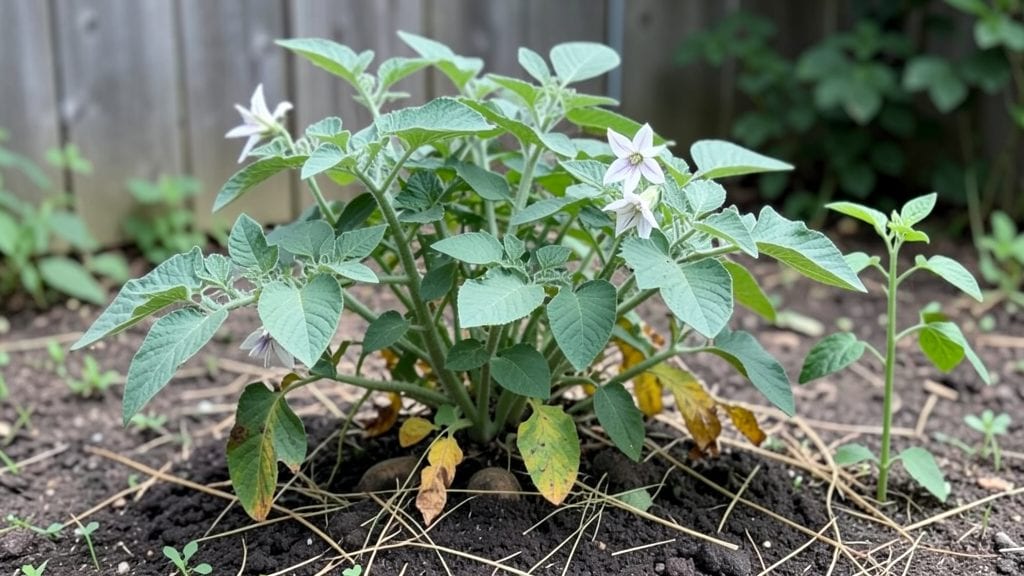
Peppers and potatoes should not be planted together because they share common pests like Colorado potato beetles and aphids, and their competing nutrient needs stress nearby plants. Instead, pair peppers with basil, onions, or marigolds for better growth and pest control.
These two vegetables are like rivals in the garden—both are heavy feeders that compete for the same nutrients, especially nitrogen and phosphorus, which can stunt their growth if they're too close. 🌱 Peppers also attract pests that potatoes love, like flea beetles, and vice versa, creating a vicious cycle where diseases spread faster between them.
Even if you rotate crops, the stress on the soil makes it harder for both to thrive side by side.
💡 In This Article
- Why Peppers and Potatoes Are Poor Garden Companions
- Best Plant Pairings for Peppers and Potatoes
Why peppers and potatoes are poor garden companions
The real problem with planting peppers and potatoes together isn't just about space—it's about their shared vulnerabilities.
Both belong to the Solanaceae family (nightshades), which makes them susceptible to the same soil-borne diseases. Verticillium wilt, for example, thrives in these plants and can spread rapidly when they're grown in close proximity, causing yellowing leaves, stunted growth, and even plant death.
The fungus lives in the soil for years, waiting for another susceptible host.
Here's what's actually happening at the root level: Peppers and potatoes compete fiercely for nitrogen and phosphorus, two critical nutrients. Potatoes, especially when tubers are forming, demand up to 20% more nitrogen than peppers do at their peak.
When they're planted too close, the soil becomes depleted faster, leading to weak stems in peppers (which can't support heavy fruit) and small, misshapen potatoes. The competition is so intense that even well-fertilized soil can't keep up.
Pests make this combination even worse. Colorado potato beetles, for instance, will happily munch on both plants, and their larvae can decimate a pepper crop just as easily as they would potatoes.
Aphids, another shared pest, thrive on the sap of both vegetables, spreading viruses like tobacco mosaic that can ruin entire harvests. The scent profiles of these plants also attract similar beneficial insects—like ladybugs—but in the wrong quantities, creating an imbalance that favors pests over pollinators.
Growth habits clash too. Potatoes grow low to the ground with sprawling foliage, while peppers reach upward with dense, bushy plants. This creates a shady, humid microclimate at the base of peppers, perfect for fungal diseases like early blight.
The dense canopy also blocks airflow, trapping moisture and making it harder for peppers to dry out after watering—another invitation for rot. In contrast, peppers prefer full sun (6-8 hours daily), while potatoes tolerate partial shade better, leading to uneven light exposure when planted together.
What most people don't realize is how the soil structure suffers. Both plants have deep root systems that can reach 12-18 inches underground, competing for the same water and nutrients.
When drought hits, potatoes will steal water from peppers, causing blossom-end rot in the peppers—a common issue that makes them bitter and unusable. The root competition also makes it harder for beneficial mycorrhizal fungi to establish, which are crucial for nutrient absorption in both plants.
Consider this real-world example: In a 2018 study by the University of Georgia, gardens where peppers and potatoes were planted within 3 feet of each other showed a 30% reduction in yield for both crops compared to gardens where they were planted separately.
The stress was visible—the peppers had smaller, thinner walls, and the potatoes developed more eyes and fewer edible tubers. The takeaway? Their proximity creates a perfect storm of competition, disease, and pest pressure that's hard to overcome.