
Pests and Diseases
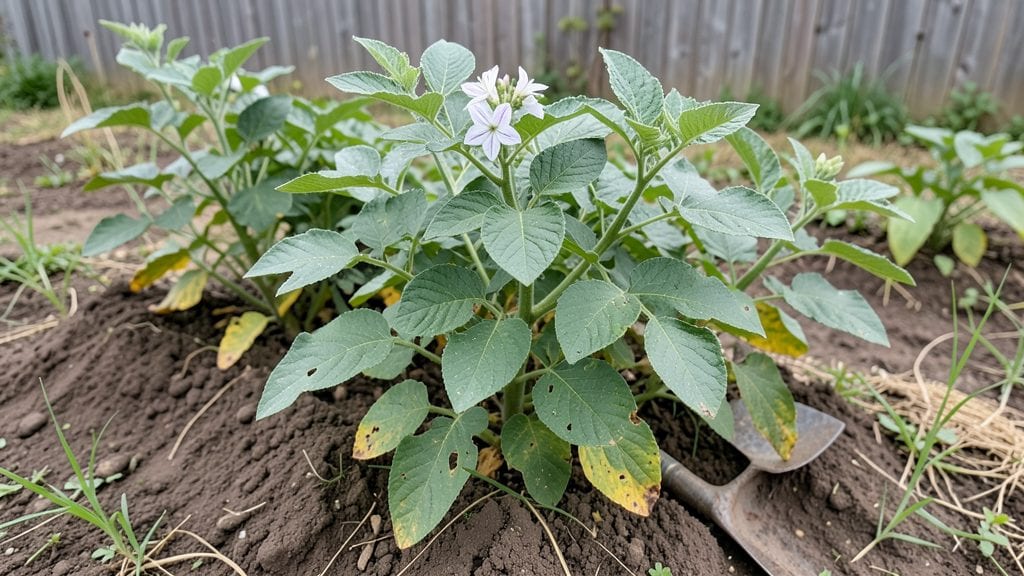
You can plant peppers and potatoes together only with extreme caution, as they share devastating diseases like verticillium wilt and late blight, which spread rapidly when grown in close proximity. Proper spacing and vigilant pest control are essential to prevent catastrophic crop loss.
While these two crops can technically share the same garden space, their compatibility hinges on disease prevention. 🌱 Peppers and potatoes both fall prey to soil-borne pathogens like Phytophthora infestans, which thrives in moist conditions and can wipe out entire beds if left unchecked.
The key to success lies in strategic spacing—keeping them at least 3 feet apart reduces cross-contamination risks while allowing for shared pest deterrents like marigolds. I’ve found that raised beds with sterile soil further minimize disease transmission, though they require more frequent monitoring for early signs of stress.
What many gardeners overlook is the pest connection—both plants attract aphids and Colorado potato beetles, which can create a feedback loop of infestation. The solution isn’t just about physical separation but also about proactive companion planting.
For example, interspersing basil between rows disrupts pest life cycles while adding flavor to your harvest. Rotating crops annually is another non-negotiable step to break disease cycles in the soil.
💡 In This Article
- Disease and Pest Risks of Growing Peppers with Potatoes
- Safe Companion Planting Strategies for Peppers and Potatoes
Disease and pest risks of growing peppers with potatoes
The real danger of growing peppers and potatoes together lies in their shared vulnerability to soil-borne pathogens. Both crops are susceptible to Verticillium dahliae, a fungus that survives in soil for years and thrives in warm, moist conditions.
When planted nearby, infected soil particles can spread through water splashes or garden tools, creating a perfect storm for disease transmission. The fungus invades plant vascular systems, causing wilting that starts at the edges and progresses inward, often killing plants within weeks.
Another major threat is Phytophthora infestans, the organism responsible for late blight—a devastating disease that spreads rapidly in cool, humid weather.
This pathogen produces spores that can travel up to 10 feet through wind or water, making proximity between peppers and potatoes especially risky. 🌱 The disease first appears as dark, greasy spots on leaves, but within days, it can rot stems and tubers.
Unlike many plant diseases, late blight doesn't just weaken plants—it can destroy entire harvests in a matter of days if conditions are favorable.
Pest attraction adds another layer of complexity. Both peppers and potatoes emit similar chemical signals that attract aphids, which thrive on both plants and spread viral diseases like tobacco mosaic virus. The Colorado potato beetle, a voracious pest, also targets peppers, creating a mutual attraction that accelerates infestations.
When these crops are planted together, pests can move freely between them, turning a minor pest problem into a full-blown garden crisis.
Here's what's actually happening at the soil level: These pathogens don't just affect the plants above ground—they establish persistent colonies in the root zone. Verticillium can survive for up to 15 years in dormant form, while Phytophthora produces thick-walled sporangia that remain viable in moist soil.
This persistence means that once infected, your garden soil becomes a ticking time bomb for future plantings, regardless of what you choose to grow next.
The proximity factor can't be overstated. Studies show that disease spread between susceptible plants increases exponentially when they're planted within 2 feet of each other. At this distance, spores and infected soil particles have direct pathways to move between plants through irrigation water, foot traffic, or even raindrops.
The solution isn't just about physical separation—it's about breaking the disease cycle entirely through proper garden hygiene and crop rotation.
What most gardeners don't realize is how quickly these diseases can become systemic. Once Verticillium enters a plant's vascular system, it can't be cured—only managed through prevention. The fungus produces toxins that disrupt water transport, causing the classic wilting symptoms that appear long after initial infection.
By the time you notice problems, the pathogen may already be established in your entire garden bed, ready to attack any susceptible plants you introduce next season.
This is why rotation is critical: Moving your pepper and potato crops to completely different garden locations each year disrupts the pathogen's life cycle.
Without a continuous food source, Verticillium and Phytophthora populations decline naturally over time. 💫 The key is to wait at least 3-4 years before replanting susceptible crops in the same spot—a rule that seems long but is essential for maintaining healthy soil ecosystems.