
Trees
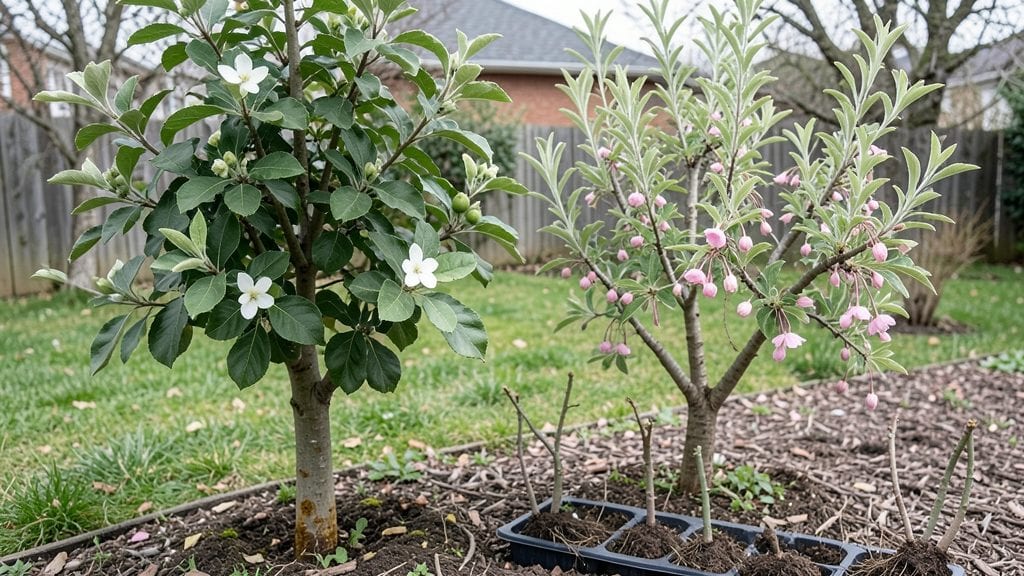
Planting apple and peach trees together is possible but requires careful planning to avoid cross-pollination issues, shared pests, and competitive root systems. Space them at least 20–30 feet apart and choose varieties with different bloom times to reduce interference.
While these trees can coexist, their different growth habits and pest vulnerabilities create challenges.
Apple trees thrive in cooler climates with dense canopies, while peaches prefer warmer conditions and open airflow—mixing them risks fungal diseases like brown rot spreading between species. 🌳 I’ve seen success when planting them on opposite sides of a property, using windbreaks or hedgerows to separate their root zones while still allowing shared benefits like pollinator support.
Another key factor is their fruiting cycles: peaches bloom earlier in spring, while apples often follow by 2-3 weeks. This staggered timing helps reduce cross-pollination confusion, though it doesn’t eliminate the risk entirely.
For best results, I recommend testing soil pH separately for each tree—apples prefer 6.0-7.0, while peaches do best in slightly acidic 6.0-6.5 ranges.
💡 In This Article
- Cross-Pollination Risks Between Apple and Peach Trees
- Optimal Spacing and Companion Planting Strategies
Cross-pollination risks between apple and peach trees
The real challenge with planting apple and peach trees together lies in their shared pollinators—bees and other insects that visit both blossoms. When these trees bloom simultaneously, pollen from one species can fertilize the other, creating hybrid fruit that's often inedible or lacks desirable traits.
Apple trees (Malus domestica) and peach trees (Prunus persica) belong to different genera, meaning their genetic compatibility is limited, but cross-pollination still occurs. The result? Malformed fruit with poor flavor, thin flesh, or even complete failure to develop.
Here's what's actually happening at the cellular level: Apple pollen contains 16 chromosomes, while peach pollen has 16 as well, but their genetic structures differ significantly. When cross-pollinated, the resulting seedling would have 32 chromosomes—a condition called polyploidy—which disrupts normal fruit development.
The worst-case scenario is no fruit at all, as the plant's energy gets diverted toward abnormal growth patterns. 🌱 Even if fruit forms, it often lacks the sweetness or texture consumers expect from either species.
Timing matters more than most gardeners realize. Peach trees typically bloom 2-3 weeks earlier than apple trees in most climates, which creates a critical window where cross-pollination can occur.
For example, a late-blooming peach variety in Zone 7 might overlap with early apple blossoms, while early peaches in Zone 5 could finish blooming before apples even open. This staggered approach reduces—but doesn't eliminate—hybridization risks.
The key is selecting varieties with non-overlapping bloom periods, which requires checking your local USDA hardiness zone and specific cultivar bloom charts.
Disease transfer poses another serious risk. Both trees are susceptible to fire blight (a bacterial infection) and brown rot (a fungal disease), but their symptoms manifest differently. Apple trees show dark, oozing cankers on branches, while peaches develop leather-like spots on fruit.
When planted nearby, these pathogens can spread rapidly through shared air currents or splashing rain. 🍎🍑 A single infected apple branch can contaminate peach blossoms within 50 feet under ideal conditions, leading to complete crop loss in both species.
What most people don't realize is how root grafts between these trees can create hidden problems. When roots from different species grow together, they form natural bridges that allow diseases and nutrients to move between trees.
This phenomenon, called graft incompatibility, can weaken both plants over time. The solution? Install a 6-inch deep barrier (like hardware cloth) between root zones to prevent underground connections while still allowing surface water drainage.
Consider this real-world example: A commercial orchard in California's Central Valley planted apple and peach trees 15 feet apart without proper planning. Within three years, 40% of their peach crop showed signs of apple scab—a fungal disease that thrives in the dense foliage of apple trees.
The lesson? While these trees can share space, their biological differences demand careful separation. 🌿