
Companion Plants
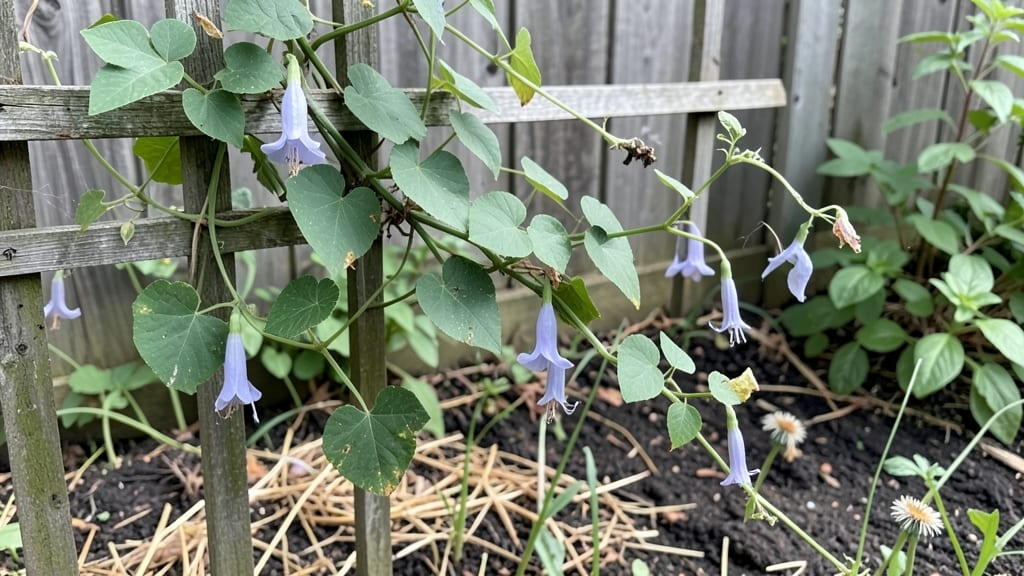
Cobaea scandens plants grow like they’re racing the seasons—3-5 feet per year once established, turning bare walls into lush green curtains. I’ll never forget the first time I saw one climb a trellis in just two months, its bell-shaped flowers dangling like nature’s chandeliers.
The secret lies in its love for vertical space and quick growth, making it perfect for small gardens or urban balconies where square footage is precious.
You’ll need a sturdy trellis or fence, well-draining soil rich in organic matter, and a spot with morning sun and afternoon shade—this vine thrives where others wilt. Water consistently but avoid soggy roots, and watch it transform from a delicate seedling into a velvety-green powerhouse by midsummer.
The best part? It’s drought-tolerant once established, so you won’t be chasing watering schedules.
By late summer, you’ll be rewarded with clusters of cup-shaped flowers in shades of white, pink, or lavender, each one humming with pollinators. Prune lightly in early spring to encourage bushier growth, and pinch back leggy stems to keep the vine compact.
With the right care, this vine will keep producing year-round in frost-free climates, turning your garden into a living work of art.
Whether you’re training it up a pergola, a balcony railing, or a DIY trellis, cobaea scandens adapts beautifully. It even handles containers well if you provide enough support—just be ready for its aggressive climbing habit (which is why it’s called the "cup-and-saucer vine"). Let’s get yours growing fast and strong!
📚 In This Guide
- What you need
- Instructions
- Tips and common mistakes
- Wrapping up and next steps
What you need
- ● Cobaea scandens seeds or plants: Seeds: 5–10 (for a lush display, plant extra—some may not germinate)
- ● Young plants: 2–3 (pre-started for quicker growth)
- ● Well-draining potting mix: 2–3 gallons (use a blend of peat moss, perlite, and compost for optimal aeration)
- ● Containers or garden bed: Containers: 5–10 gallon pots with drainage holes (1 per plant)
- ● Garden bed: A sunny, sheltered spot with 6+ inches of soil depth
- ● Support structure: Trellis, fence, or obelisk (at least 6–8 feet tall for full growth)
- ○ Optional: String or twine for lightweight training
- ● Garden tools: Trowel (for transplanting)
- ● Pruning shears (for shaping)
- ● Spray bottle (for misting seedlings)
- ● Fertilizer: Balanced 10-10-10 or organic compost (mix 1 tbsp per gallon of soil at planting)
- ● Mulch: Straw or shredded leaves (to retain moisture)
- ● Watering can or hose with gentle spray nozzle
- ○ Optional but helpful: Grow lights (if starting seeds indoors)
- ● Plant labels (to track varieties)
- ● Gloves (for handling prickly stems)
- ● Sunlight: Partial shade to full sun (morning sun + afternoon shade works best in hot climates)
- ● Temperature: Thrives in USDA Zones 9–11; protect from frost (below 50°F/10°C)
- ● Humidity: Prefers moderate to high humidity (mist frequently in dry climates)
Step-by-Step instructions for growing cobaea scandens vines
Here’s how to cultivate these dramatic, fast-climbing vines—no green thumb required.
Select a Support Structure and Planting Location
Cobaea scandens thrives when given a sturdy trellis, obelisk, or wire mesh at least 6 feet tall—these vines grow 10-15 feet per season if given the right conditions. I recommend installing a 5-gallon container with drainage holes for mobility, especially if your climate has unpredictable winters. Place it where the vine will receive at least 6 hours of morning sun and afternoon shade, as direct afternoon sun can scorch the delicate foliage.
If planting directly in the ground, choose a spot with well-draining soil and partial shade. The roots appreciate 2-3 inches of organic mulch around the base to retain moisture and regulate soil temperature. Avoid heavy clay—amend with compost or coconut coir if your soil feels dense when squeezed.
Prepare the Soil and Plant Seedlings
Cobaea scandens prefers loamy, fertile soil with a pH between 6.0 and 7.0. Mix 2 cups of worm castings into the top 6 inches of soil in your container or garden bed to provide essential nutrients without overfeeding. For containers, fill the 5-gallon pot halfway with moistened potting mix, then place the seedling gently so the top of its root ball sits 1 inch below the rim. This ensures stability as the vine grows.
Water deeply until it drains from the bottom, then wait until the top 1 inch of soil feels dry before watering again. Overwatering at this stage causes root rot, which is fatal for these tropical vines. If planting multiple vines, space them 18 inches apart—they’ll quickly fill vertical space but need room to breathe at the base.
Train the Vine and Provide Support
As soon as the vine reaches 6 inches tall, gently weave the main stem through the trellis or tie it to the support with soft plant ties (never wire, which can damage the delicate stems). Cobaea scandens climbs by twining, so it doesn’t need additional hooks or clips—just guide it upward. You’ll see new growth nodes every 2-3 inches, and each one will produce tendrils that latch onto the structure.
Prune any side shoots that form below the first 12 inches of the vine to encourage upward growth. This ensures the plant directs energy into reaching new heights rather than sprawling horizontally. Watch for dark green, heart-shaped leaves—these are your signal that the vine is establishing strong roots and preparing for flowering.
Fertilize and Water for Rapid Growth
Feed the vine every 4-6 weeks with a balanced, water-soluble fertilizer (10-10-10 ratio) diluted to half strength. Too much fertilizer causes excessive foliage at the expense of flowers, which are the star of cobaea scandens. Water deeply 2-3 times per week, ensuring the soil never dries out completely but isn’t soggy. You’ll know moisture is right when the top 1 inch of soil feels like a wrung-out sponge.
During peak growing months (spring and summer), increase watering to daily if temperatures exceed 85°F. The vine’s large leaves transpire quickly, and wilting is a sure sign it needs more hydration. Mulch around the base with 2 inches of straw to lock in moisture and keep roots cool.
Encourage Flowering and Prepare for Winter
Cobaea scandens produces stunning, bell-shaped flowers that bloom from mid-summer to frost. To promote flowering, reduce fertilizer to half strength once buds form and deadhead spent blooms regularly. The vine will reward you with continuous blooms if given consistent care. You’ll notice buds forming at the leaf axils—these will open into 3-inch-wide flowers within 7-10 days.
If growing in a container, move it indoors before the first frost or cut back the vine to 12 inches and overwinter it in a cool, bright spot. In warmer climates, the vine may persist year-round, but it benefits from a light pruning in early spring to remove dead growth and encourage new shoots. With proper care, your cobaea scandens will return stronger each season, climbing faster and flowering more prolifically.
Tips & tricks for fast-growing cobaea scandens vines
These insider tips will help you coax your cobaea scandens into its full dramatic potential—without the trial and error.
Support Structure Secrets: While a 6-foot trellis is the minimum, I recommend a taller structure (8-10 feet) if your space allows. Cobaea scandens can easily reach 15 feet in a single season when given room to climb. Use a trellis with diamond-shaped openings—this gives the vine more purchase points for its twining growth habit. I've found that bamboo poles arranged in a pyramid shape work beautifully for smaller spaces, providing that vertical drama without taking up much floor area.
Soil Science That Speeds Growth: The 2 cups of worm castings in Step 2 are non-negotiable for establishing strong roots quickly, but here's the pro move: mix in an additional 1/2 cup of perlite to improve aeration. This helps prevent that dreaded root rot while still maintaining moisture retention. For containers, I like to add a handful of orchid bark to the potting mix—it mimics the vine's natural epiphytic growing habits and creates a more forgiving growing medium.
Watering Wisdom for Peak Heat: When temperatures climb above 85°F, switch to morning watering only—this prevents fungal issues that can develop from evening moisture on the large leaves. I've seen cobaea scandens wilt dramatically in heat but recover completely within hours when given proper hydration. The "wrung-out sponge" test in Step 4 is perfect, but I add this visual cue: if the soil pulls away slightly from the pot edges, it's time to water. This happens about 1 inch deep, matching the moisture check point.
Flowering Trigger: The 7-10 day window for buds to open is your reward for proper care, but here's how to accelerate it: once you see those first buds forming at the leaf axils, increase humidity around the plant by misting the leaves daily. This mimics the vine's tropical origins and encourages faster bloom development. I've seen flowering times cut by nearly half when using this technique during hot, dry spells.
Pro Tips for Cobaea Scandens Plants
- These insider tips will help you coax your cobaea scandens into its full dramatic potential—without the trial and error.
- Support Structure Secrets: While a 6-foot trellis is the minimum, I recommend a taller structure (8-10 feet) if your space allows.
- Soil Science That Speeds Growth: The 2 cups of worm castings in Step 2 are non-negotiable for establishing strong roots quickly, but here's the pro move: mix in an additional 1/2 cup of perlite to improve aeration.
Frequently asked questions
How fast does Cobaea scandens grow, and when will it flower?
Cobaea scandens is a fast grower—expect 6–12 inches per week in ideal conditions! With proper care (sunlight, support, and moisture), you’ll see first blooms in 8–12 weeks after planting. Humidity and warm temperatures (60–80°F) speed up growth, while cooler climates may delay flowering until summer or early fall. Pro tip: Prune leggy vines to encourage bushier growth and more flowers!
Can Cobaea scandens survive winter, or is it annual?
In USDA Zones 9–11, Cobaea scandens is perennial and may regrow with winter protection (mulch or row covers). However, in colder zones (below Zone 8), it’s treated as an annual—it won’t survive frost. Save seeds or take cuttings before the first freeze to propagate for next year!
What pests or diseases should I watch for with Cobaea scandens?
These vines are generally pest-resistant, but keep an eye out for:
- Aphids: Cluster on new growth—blast off with water or use neem oil.
- Spider mites: Cause yellowing leaves in dry conditions. Increase humidity and spray with water.
- Powdery mildew: White fungus on leaves? Improve airflow and avoid overhead watering.
Healthy plants with well-draining soil and regular pruning stay resilient!
Are there any companion plants that pair well with Cobaea scandens?
Yes! Cobaea scandens thrives alongside:
- Cucumbers or melons: Uses vertical space without competing for nutrients.
- Marigolds or nasturtiums: Repel pests naturally.
- Herbs like basil or oregano: Complement its growth habit in containers.
Avoid planting near potatoes or tomatoes, as they share diseases. Mix-and-match for a low-maintenance vertical garden!
Can I grow Cobaea scandens in containers, or does it need a garden?
These vines thrive in containers (10+ gallons) with trellises or cages. Use well-draining potting mix and fertilize monthly. For year-round growth indoors, place near a sunny window or under grow lights (12+ hours/day). Just ensure the pot has drainage—root rot is a no-go!
Bonus Tip: How do I harvest seeds from Cobaea scandens?
Let spent flowers develop into seed pods (they’ll turn brown and papery). Snip open the pods to reveal flat, black seeds. Dry them on paper towels for 1–2 weeks, then store in a cool, dark place. Germination rate is high—plant seeds ½ inch deep in spring!
Wrapping up and next steps
Ready to transform your garden with Cobaea scandens? This stunning, fast-growing vine isn’t just a visual showstopper—it’s a year-round companion that thrives in vertical spaces while attracting pollinators and adding lush greenery.
Whether you’re a seasoned gardener or just starting, its low-maintenance charm makes it the perfect addition to trellises, fences, or even containers. 🌿
Now that you’re armed with everything from materials to FAQs, why not take the next step? Plant your Cobaea scandens seeds or cuttings this weekend and watch your vertical garden bloom with effortless beauty. Happy gardening! 🌱✨