
Blooming
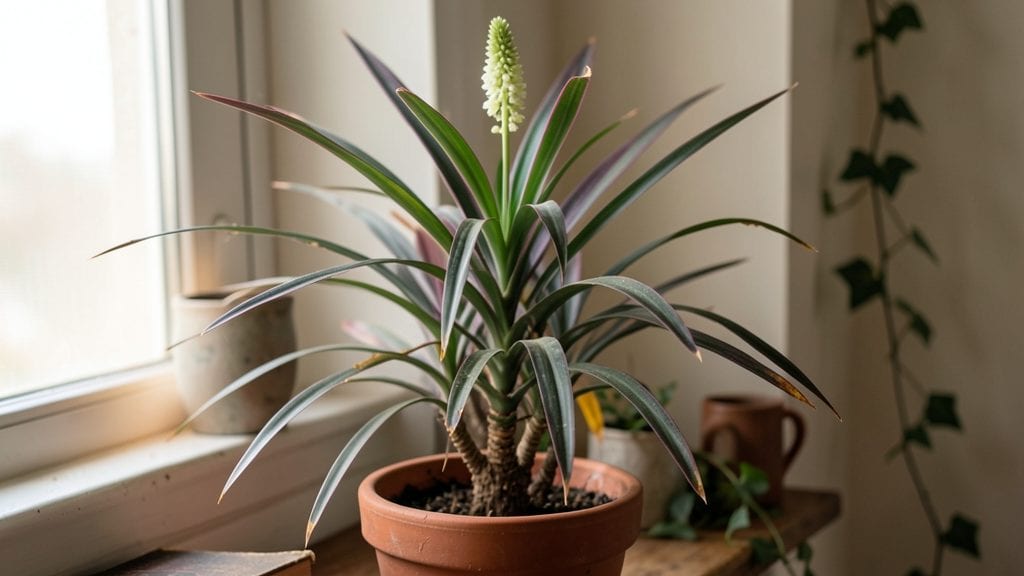
A Dracaena plant bloom occurs when mature plants produce striking, fragrant flowers on tall stalks, signaling optimal care and environmental conditions. Most varieties bloom indoors only after years of growth, often in late winter or spring, requiring patience and precise light, water, and humidity management.
This rare indoor spectacle happens because Dracaenas are tropical plants that naturally flower in response to specific conditions—think of it as their way of saying, "I’m thriving!" 🌿 Unlike many houseplants, they need consistent bright indirect light (like near an east-facing window) and a 3+ year maturity period before they’ll even consider blooming.
Even then, they’re picky: too much direct sun or inconsistent care can delay—or even prevent—those fragrant stalks from appearing.
💡 In This Article
- Dracaena Flowering Science: Light, Age, and Stress Triggers
- Step-by-Step Guide to Encouraging Dracaena Blooms
Dracaena flowering science: light, age, and stress triggers
Here's what's actually happening when your Dracaena finally blooms: it's responding to a complex interplay of photoperiodism and physiological maturity. These plants originate from tropical regions where day length changes signal seasonal transitions.
The key factor is light intensity—specifically, exposure to 12-14 hours of bright indirect light daily triggers the production of florigen, a flowering hormone. Without this light threshold (typically 1,000-2,000 foot-candles), the plant remains in vegetative growth mode indefinitely. 🌞
The age requirement isn't arbitrary—studies show Dracaenas need 3-5 years of consistent growth to develop the energy reserves and root systems capable of supporting flowering.
This is because blooming demands significant resources: a mature Dracaena can produce flower spikes 2-3 feet tall with 50-100 individual blossoms, each requiring specialized nutrients. The plant's metabolism shifts from leaf production to reproductive growth, which explains why younger plants focus solely on foliage development.
Think of it like a teenager saving for college—they can't afford to party until they've built up their savings account.
Controlled stress plays a surprising role too. Slight water reduction (letting the top 1-2 inches of soil dry between waterings) mimics natural drought periods in their native habitat. This triggers the plant's survival mechanisms, including the release of abscisic acid, which can actually stimulate flowering in some species.
The sweet spot is 40-50% soil moisture—too dry, and the plant won't have energy; too wet, and it won't trigger the stress response. It's like giving your plant a controlled "challenge" to prove it's ready for reproduction. 🌱
Temperature also matters—Dracaenas prefer 65-75°F during active growth, with a 10°F drop at night to simulate seasonal changes. This temperature fluctuation helps regulate the plant's circadian rhythms, which are closely tied to flowering cycles.
The combination of proper light, age, and these subtle environmental cues creates what botanists call an "integrative flowering response"—where multiple signals must align before the plant commits to blooming. It's nature's way of ensuring the plant only flowers when conditions are truly optimal for survival.
What most people don't realize is that even after meeting these conditions, some Dracaena varieties (like Dracaena fragrans) may still require a 12-18 month "rest period" with reduced watering and cooler temperatures to complete the flowering process.
This dormancy phase allows the plant to fully allocate resources to flower development rather than maintaining active growth. It's like preparing for a marathon—you can't just start running; you need proper training and recovery periods first. 🏃♂️
Interestingly, the fragrant blooms you see are actually secondary flowers that develop after the initial inflorescence emerges. The primary flowers are often small and green, serving as a platform for the more showy secondary blooms that attract pollinators in the wild.
This two-phase flowering process explains why some growers report seeing "buds" that take weeks to develop into the fragrant flowers we recognize. The entire process is a fascinating example of how plants have evolved to maximize reproductive success under optimal conditions. 🌸