
Fertilization
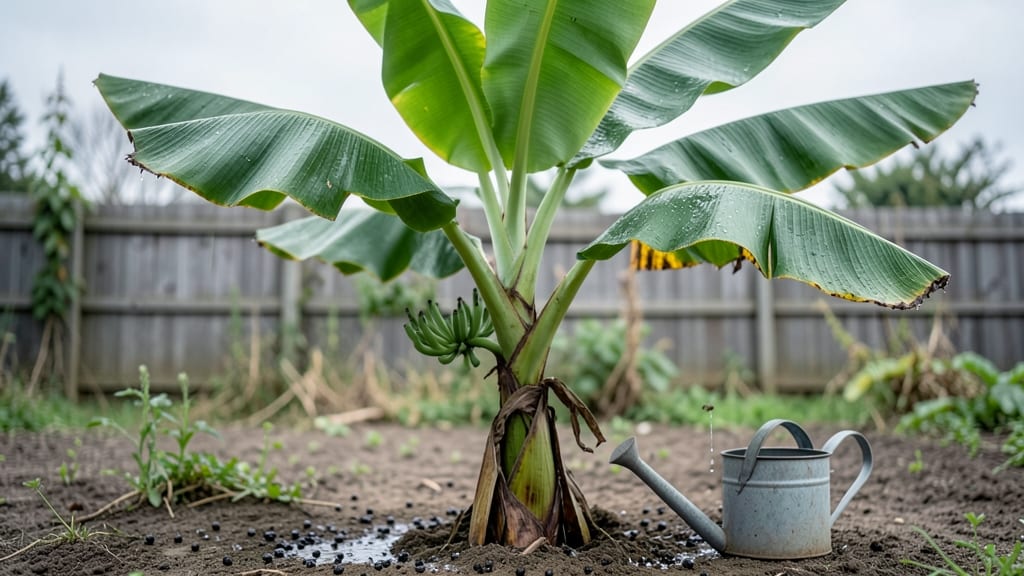
Fertilizing banana plants 🍌 is the secret to turning your 10-foot giants into fruit-bearing powerhouses—if you get the timing and nutrients right.
Banana plants grow at a breakneck pace—but only when their soil is perfectly balanced. One wrong move with fertilization can stunt growth or even kill your plant, yet most gardeners miss the critical timing and nutrient ratios that unlock rapid, healthy development.
Think of it this way: too little fertilizer and you’ll watch your plant struggle, but too much can burn the roots and send your 🍌 into shock. The key? A high-potassium mix applied in the right seasons, paired with soil that drains well but holds moisture.
In this guide, I’ll walk you through the exact fertilizer schedule, soil tests to run, and the three biggest mistakes that kill banana plants—so you can finally grow fruit instead of just leaves.
Optimal soil pH and nutrient mix for banana plants
Banana plants thrive when their soil is rich and slightly acidic to neutral, but getting the balance right can feel like solving a puzzle. The ideal soil pH for banana plants ranges between 5.5 and 7.0, creating the perfect environment for nutrient absorption.
Too acidic (below 5.5) or alkaline (above 7.0) soils can lock out essential nutrients, causing stunted growth or poor fruit development.
I’ve learned this the hard way—my first banana plant wilted because the soil was too alkaline, and I didn’t catch it until it was too late!
Beyond pH, banana plants demand a high-potassium diet to fuel their rapid growth and fruit production. Potassium helps regulate water movement in the plant and boosts disease resistance. Nitrogen supports leafy growth, while phosphorus ensures strong root development and flowering.
But here’s the catch: too much nitrogen without potassium can lead to lush leaves but no fruit—something I’ve seen in many gardeners’ mistakes.
Now, let’s talk micronutrients. Magnesium is crucial for chlorophyll production, and a deficiency shows up as yellowing between leaf veins. Calcium strengthens cell walls, preventing issues like blossom-end rot in fruits. Even trace amounts of zinc, manganese, and iron play vital roles in enzyme function and energy production.
Skipping these can leave your banana plant looking weak, even if the macronutrients are perfect.
Testing your soil is the first step to success. Use a digital pH meter or a soil test kit to check the current pH. If it’s too low, amend with lime (calcium carbonate) to raise it.
For soils that are too alkaline, add sulfur or peat moss to lower the pH gradually. I always test my soil in early spring before the growing season kicks off—it’s a habit that’s saved me from costly mistakes.
Organic matter like compost or well-rotted manure improves soil structure and provides a slow-release nutrient boost. For faster results, a balanced fertilizer (10-10-10 or 8-8-8) works well, but switch to a potassium-heavy formula (like 5-10-10) when your plant starts flowering.
My go-to is a mix of compost tea and a synthetic fertilizer to cover all bases without overloading the soil.
Here’s a quick rule of thumb: feed banana plants every 4-6 weeks during the growing season (spring through fall). In cooler months or dormant periods, cut back to once every 8-12 weeks. Over-fertilizing is a common trap—too many salts can burn roots, and excess nitrogen can lead to fungal issues.
Always water your banana plant deeply before and after fertilizing to help nutrients absorb and prevent salt buildup.
One of my favorite organic amendments is banana peel tea. Yes, you read that right! Soaking banana peels in water for a few days releases potassium and other nutrients. I strain it and use it as a foliar spray or soil drench.
It’s a free, zero-waste way to give your banana plant a potassium boost without synthetic fertilizers. Plus, it’s a fun experiment to try with kids!
If your banana plant shows signs of nutrient deficiency—like yellowing leaves, weak stems, or small fruit—it’s time to act. A soil test will tell you exactly what’s missing. For example, yellowing between leaf veins signals magnesium deficiency, while purple tinges on undersides often mean phosphorus is lacking.
Adjust your fertilizer mix accordingly, and monitor your plant’s response over the next few weeks.
Remember, banana plants are heavy feeders, especially when they’re flowering or fruiting. During these stages, I increase the potassium in my fertilizer mix and reduce nitrogen slightly to encourage fruit development over leaf growth. It’s all about balance—just like in a well-conducted symphony, every nutrient plays its part.
Finally, don’t forget to mulch! A 3-4 inch layer of organic mulch (like straw or wood chips) helps retain moisture, regulates soil temperature, and slowly releases nutrients as it breaks down. Mulching also suppresses weeds, which compete with your banana plant for nutrients.
I mulch my banana plants in early spring and refresh it every few months—it’s a game-changer for keeping the soil healthy and the plant thriving.
🍌