
Pruning
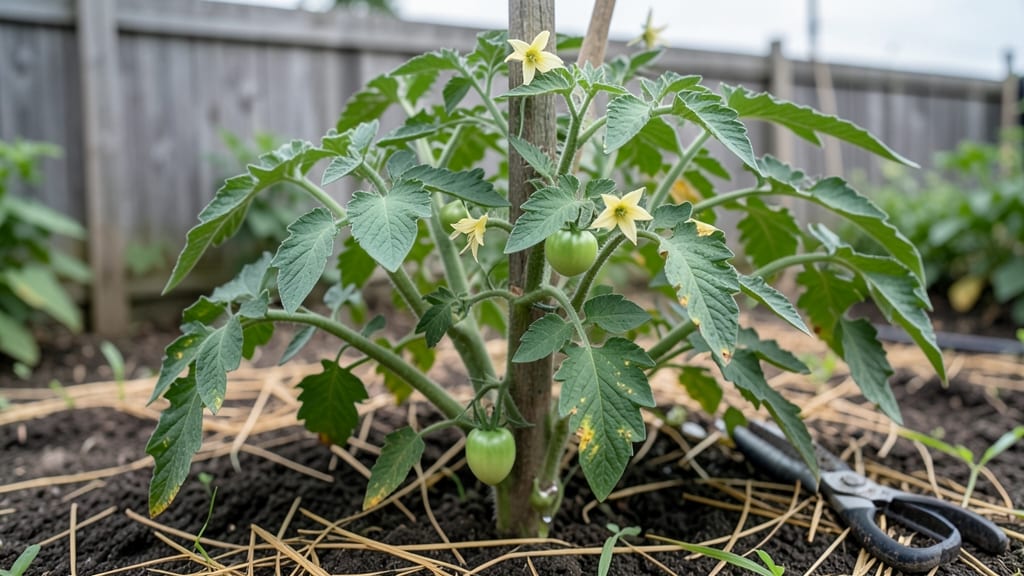
Trimming tomato plants as they grow isn't just about keeping them neat—it’s the secret to bigger, healthier fruit and fewer diseases. 🌱 I’ve watched my indeterminate tomatoes go from scraggly to bushy, producing pounds more tomatoes just by making a few simple cuts each week.
The key is knowing where to trim (those little side shoots called suckers) and when (before they drain energy from your main plant).
You’ll only need sharp pruning shears, a small notebook to track growth, and about 15 minutes every few days during peak season. Determinate varieties need almost no trimming, while indeterminate types thrive when you remove suckers early.
The goal? More sunlight and airflow reaching the main stem and fruit clusters—so every cut works toward a heavier harvest, not just a tidier plant.
After just a few weeks of precise trimming, you’ll notice sturdier stems, fewer yellowing leaves, and fruit that ripens faster. The plants focus their energy on what matters: juicy, vine-ripened tomatoes instead of wasted growth.
And yes, it does make a difference—my neighbor’s unpruned plants produced half as many tomatoes, despite identical soil and water.
This method works for container-grown tomatoes too, just scale the tools down. The only real mistake? Waiting until the plant is already overgrown. Start early, and you’ll wonder why you didn’t do this sooner. Ready to see that difference in your own garden?
📚 In This Guide
- What you need
- Instructions
- Tips and common mistakes
- Wrapping up and next steps
What you need
- ● Pruning shears or sharp bypass pruners: Choose sterilized, stainless-steel tools (e.g., Felco F-2 or Corona Tools) to avoid disease spread. Size: 5–7 inches for precision cuts.
- ● Gloves: Heavy-duty gardening gloves (e.g., Wolf Garden or Fiskars) to protect against thorns and sap irritation.
- ● Disinfectant: 70% isopropyl alcohol or a 10% bleach solution (1 part bleach to 9 parts water) to sterilize tools between cuts.
- ● Compost bin or paper bag: For collecting pruned debris (avoid composting diseased plant parts).
- ● Watering can or hose: With a gentle spray nozzle to hydrate plants post-pruning.
- ● Plant tie or soft twine: To support main stems (e.g., EcoTie or jute twine).
- ● Garden kneeler/pad: For comfort during long pruning sessions.
- ○ Plant growth regulator (optional): Such as Seaweed extract (1 tsp/gallon) to reduce stress after pruning.
- ● Label markers: If you’re experimenting with different pruning techniques (e.g., Dykam plant tags).
Step-by-Step guide to trimming tomato plants for bountiful harvests
Here’s how to shape your tomato plants for stronger growth and bigger fruit—no guesswork involved.
✂️ Step 1: Identify and Remove Suckers Early
Suckers are the small shoots that form in the crotch between the main stem and a branch. They drain energy from fruit production, so I remove them when they’re about 2 inches long—any longer, and they’ll compete with your tomatoes. Use clean, sharp pruning shears or your fingers to pinch them off cleanly at the base. Avoid tearing the stem, which invites disease.
Start checking for suckers when your plant reaches 12-18 inches tall, usually 3-4 weeks after transplanting. Focus on the lower third of the plant first—these suckers won’t develop into productive branches anyway. You’ll see them as tiny, leafy offshoots growing outward from the main stem.
🌿 Step 2: Prune Lower Leaves for Airflow and Sunlight
Remove the bottom 6-12 inches of leaves once the plant hits 2 feet tall. This improves airflow, reduces humidity near the soil (which prevents fungal diseases), and lets sunlight reach lower fruit. Use your fingers or shears to strip leaves cleanly, leaving the stem intact. If a leaf is diseased, bag it immediately—don’t compost it.
I prune leaves in stages: first the bottom third, then the middle leaves as the plant grows taller. Stop pruning when you reach the first flower cluster—leaving foliage above flowers ensures they get enough energy to set fruit. You’ll notice less wilting and fewer yellow leaves after this step.
☀️ Step 3: Balance Growth with Strategic Cuts
Determinate tomatoes (bush varieties) need minimal pruning—just remove suckers and diseased leaves. Indeterminate types (vining varieties) require more shaping. After the first flower cluster, let 1-2 strong branches grow from each sucker below the fruit zone. Prune the rest aggressively to redirect energy upward.
Watch for overcrowded stems—if branches rub together, they’ll create wounds where diseases like early blight can enter. Thin out competing stems at their base, leaving only the healthiest, most upright branches. You’ll see stronger stems and heavier fruit clusters within 2-3 weeks of consistent pruning.
⏰ Step 4: Maintain Through the Season
Continue removing suckers weekly during peak growth (spring to early summer). In late summer, reduce pruning to focus on fruit development. Stop pruning entirely 4-6 weeks before your first frost—new growth won’t harden off in time. You’ll know you’re on track when your plant has 3-4 main stems with well-spaced fruit clusters.
Water deeply after pruning to help the plant recover. Mulch with 2-3 inches of organic material (like straw) to retain moisture and prevent soil-borne diseases from splashing onto fresh cuts. By harvest time, your plant will look like a well-structured tree, not a tangled mess.
Tips & tricks for perfect tomato plant trimming
A few strategic cuts can transform your tomato plants from chaotic vines into productive, fruit-bearing powerhouses. Here's what I've learned after years of trial and error in the garden.
Timing is Everything: The 3-4 week mark after transplanting is your first critical window for sucker removal in Step 1. I check my plants every 7-10 days during this period, using a small hand mirror to inspect hard-to-see areas where suckers hide. Remember, those 2-inch suckers are energy vampires—once they're larger, they'll divert precious resources from your fruit. Confession: I skipped this step for years and wondered why my tomatoes never reached their full potential.
Pruning Precision: When you reach Step 2 and remove those bottom 6-12 inches of leaves, don't just yank them off—make clean cuts at the stem junction. I use my fingernail to gently scrape around the stem before pulling, which prevents tearing. For indeterminate varieties in Step 3, I make my cuts at a 45-degree angle just above a leaf node, which encourages stronger regrowth. The goal is to create a plant that looks like a well-pruned tree, not a tangled mess.
Seasonal Strategy: That weekly sucker removal in Step 4 during peak growth is non-negotiable for indeterminate varieties. I schedule it for early morning when the plants are turgid with water, making the shoots easier to spot and remove. In late summer, I switch to a "hands-off" approach, letting the plant focus all its energy on ripening existing fruit rather than producing new growth that won't mature before frost.
Disease Prevention: After every pruning session, I immediately disinfect my shears with rubbing alcohol—this simple step prevents cross-contamination between plants. For diseased leaves mentioned in Steps 2 and 3, I double-bag them in plastic before disposal to contain any spores. Real talk: I've lost entire tomato plants to early blight because I didn't follow this protocol early enough.
Pro Tips for Trim Tomato Plants As They Grow
- A few strategic cuts can transform your tomato plants from chaotic vines into productive, fruit-bearing powerhouses.
- Timing is Everything: The 3-4 week mark after transplanting is your first critical window for sucker removal in Step 1.
- Pruning Precision: When you reach Step 2 and remove those bottom 6-12 inches of leaves, don't just yank them off—make clean cuts at the stem junction.
Frequently asked questions
Got questions about trimming your tomato plants? You’re not alone! Here are answers to the most common queries to help you prune like a pro and keep those tomatoes coming.
When is the best time to start trimming tomato plants?
Start pruning when your plants are about 12–18 inches tall and have a few sets of true leaves. For indeterminate varieties (like cherry tomatoes), trim suckers—those little shoots in the leaf axils—weekly during the growing season. Determinate tomatoes (bush types) usually don’t need pruning unless you’re removing diseased or crowded foliage.
What if I don’t prune my tomato plants at all?
You’ll still get tomatoes, but pruning boosts yield and quality! Without trimming, indeterminate varieties can get overcrowded, leading to fewer, smaller fruits and higher disease risk. Determinate types may produce earlier but with less vigor. Think of pruning as giving your plant a spa day—it rewards you with healthier growth and tastier produce!
Should I remove flowers or fruit clusters when pruning?
Generally, no—leave flowers and small fruits alone! Removing them can stress the plant. However, if your plant is overloaded with blossoms (common in early spring), you can lightly thin clusters to improve air circulation. Focus on pruning leaves and suckers instead to redirect energy to existing fruit.
How do I know if I’m over-pruning my tomato plants?
Watch for these red flags: yellowing leaves, stunted growth, or fewer flowers than usual. Over-pruning removes too much foliage, reducing the plant’s ability to photosynthesize. Aim to leave 3–4 main stems (for indeterminate types) and half the lower leaves for support. If in doubt, prune less—you can always do more later!
Can I use pruned tomato stems for anything else?
Don’t toss those cuttings
—they’re gold for propagation. Stick healthy suckers or stem tips in water or moist soil to grow new plants. You can also chop and compost diseased stems (avoid adding them to your garden directly). Bonus: Pruned stems make great herb garden markers or mulch for other plants!
Wrapping up and next steps
Trimming your tomato plants isn’t just about keeping them tidy—it’s the secret to a bountiful, healthier harvest! 🌱 By mastering the art of precision pruning, you’ll encourage stronger growth, better airflow, and more fruit-bearing branches.
Start small, stay consistent, and soon you’ll be reaping the rewards of your green-thumb efforts.
Ready to put your new skills to work? Grab your pruners and head to the garden—your tomatoes are waiting! 🍅