
Companion Plants
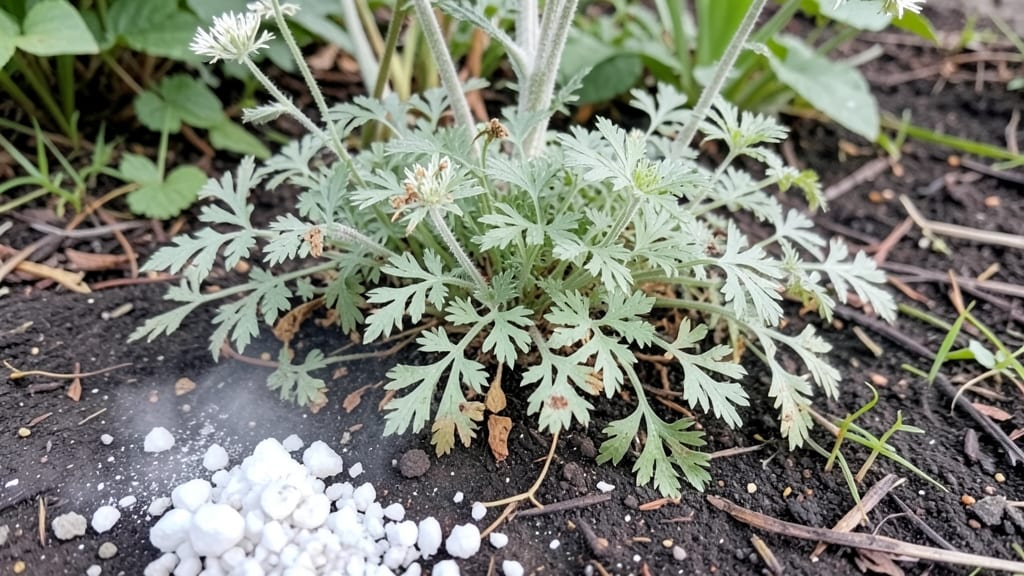
Lime on plants acts as a natural pest deterrent and soil pH booster, particularly for acid-loving varieties like hydrangeas and azaleas. Apply it carefully as a powder or diluted liquid to prevent over-alkalizing the soil.
Lime works by raising soil alkalinity, which creates an inhospitable environment for pests like aphids and slugs—these creatures avoid calcium-rich conditions. 🔥 For gardeners dealing with acidic soil, it unlocks nutrients like phosphorus and calcium that stay locked up in low-pH environments.
The key is precision: overuse can harm sensitive plants or disrupt microbial balance, so always test soil pH first and start with small applications.
When applying lime, consider the plant type and soil composition. Sandy soils need more frequent treatments since they drain quickly, while clay holds lime longer. For container plants, mix lime into the top inch of soil rather than broadcasting it—this prevents runoff and ensures even distribution.
Always wear gloves when handling powdered lime, as it can irritate skin.
💡 In This Article
- How Lime Affects Soil Chemistry and Pest Deterrence
- Best Lime Application Methods for Gardens and Potted Plants
How lime affects soil chemistry and pest deterrence
Lime—typically made from calcium carbonate—works by neutralizing acidic soil through a chemical reaction called hydrolysis. When lime dissolves in water, it releases calcium (Ca²⁺) and carbonate (CO₃²⁻) ions.
These ions bind with hydrogen ions (H⁺) in acidic soil, effectively raising the pH. For example, a soil with pH <6.0 (acidic) might need 5 pounds of lime per 100 square feet to adjust it to an ideal 6.0-7.0 range for most plants.
This shift disrupts the environment for pests like slugs and snails, whose slimy bodies are sensitive to calcium-rich conditions. 🔥
The effect varies dramatically between soil types. In sandy soils, lime dissolves quickly and washes away faster, requiring more frequent applications (every 6-12 months). Clay soils, however, hold lime longer due to their dense structure, so treatments last 2-3 years.
The granular texture of lime also physically disrupts soil compaction, improving water and nutrient penetration. For instance, hydrangeas—which thrive in pH 5.5-6.2—show dramatic color changes when lime is applied correctly, as aluminum (a nutrient blocker) becomes unavailable.
Pests like aphids and slugs avoid lime-treated areas because calcium disrupts their mucus production and exoskeleton integrity. Slugs, for example, rely on calcium-poor environments to maintain their slimy trails.
A 1-inch layer of crushed lime around plant bases creates a natural barrier, while liquid lime sprays (mixed at 1 tablespoon per gallon of water) can be foliar-applied to deter flying insects.
The key is timing: apply lime in early spring or fall when soil is moist but not waterlogged, ensuring maximum absorption. 💫
Overuse risks creating alkaline shock, where soil pH jumps too quickly, harming sensitive plants like blueberries or azaleas. Always test soil pH with a kit before applying lime—ideal ranges vary by plant type. For instance, blueberries need pH 4.5-5.5, while tomatoes prefer 6.0-6.8.
A 1-pound bag of lime typically covers 250 square feet of garden, but this varies based on soil composition. The granular form is best for large areas, while powdered lime dissolves faster in containers.
Lime also enhances nutrient availability by making phosphorus and calcium more accessible to plant roots. In acidic soils, these nutrients bind to aluminum and iron oxides, becoming "locked up." Raising pH with lime releases them, boosting growth.
For example, azaleas show 20-30% more blooms when soil pH is optimized with lime. However, excessive lime can leach magnesium and manganese, so balance is critical. 🌟
For container plants, mix lime into the top 1-2 inches of soil rather than sprinkling it on the surface. This prevents runoff and ensures even distribution. Always water thoroughly after application to activate the chemical reaction.
The granular form is ideal for pots, while a 1:10 lime-to-water solution works well for foliar sprays to deter pests like spider mites.