
Planting
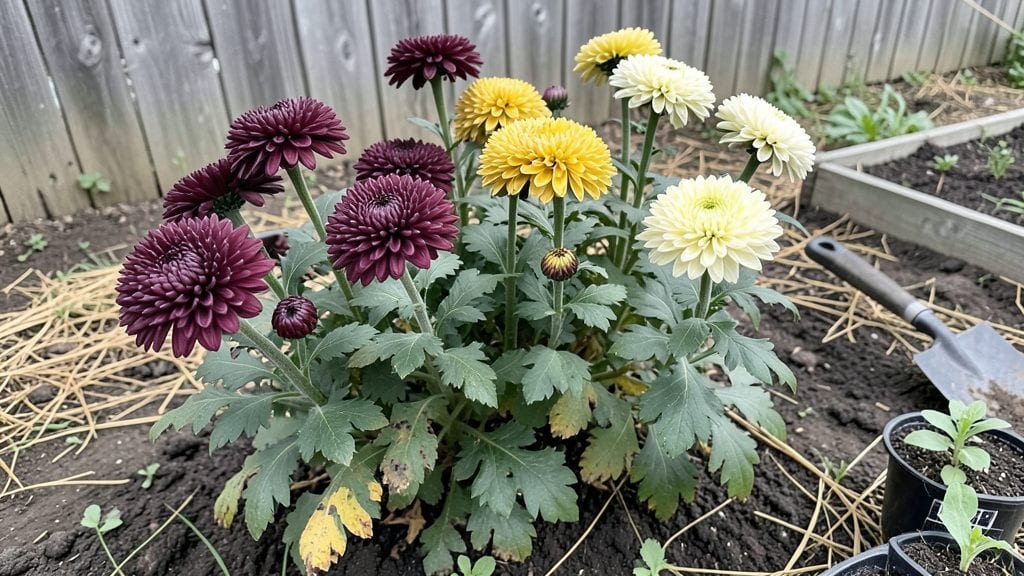
Mums planting season depends on your climate zone but typically starts in late summer to early fall, with ideal transplanting between August and October for vibrant fall blooms. Cool-season varieties thrive in zones 3-9 when soil temperatures drop below 75°F.
Timing your mum transplanting just right ensures those gorgeous fall blooms you’re dreaming of actually show up.
These hardy perennials rely on cooler weather to trigger their dormancy cycle, which is why they perform best when soil temperatures dip below 75°F—think late summer’s heat wave giving way to crisp autumn mornings.
I’ve found that planting too early in warm zones (like 8-9) can stress the plants, while waiting until after the first frost in northern regions (3-5) risks missing the optimal 60-70°F window for root establishment. 🔥
What’s fascinating is how regional frost patterns create natural planting windows—think of it like a biological countdown. In the Deep South, you might start as early as July, while gardeners in New England often wait until September to avoid premature dormancy.
The key is matching your local frost dates to the plant’s need for 8-10 weeks of cool weather before winter sets in. Pro tip: Test your soil’s readiness with a simple thermometer check before committing to the transplant.
💡 In This Article
- Climate Zones and Soil Temperature Guidelines for Mums
- Step-by-Step Mum Planting Calendar by Region
Climate zones and soil temperature guidelines for mums
Mums (Chrysanthemums) are cool-season plants that rely on specific temperature triggers to bloom. Their photosynthesis efficiency actually increases when temperatures drop below 75°F, allowing them to store energy for vibrant fall color displays.
The magic happens when daytime highs reach 60-70°F—this range triggers their natural dormancy cycle, which is essential for producing those show-stopping flowers. Think of it like a biological countdown: the plant senses shortening daylight hours and cooler temps, then shifts resources from leaf growth to flower production.
USDA hardiness zones 3-9 all provide suitable climates for mums, but the timing varies dramatically. In zones 3-5 (northern climates), gardeners should wait until after the first frost—typically late August to September—when soil temps stabilize around 60°F.
The first frost actually helps "reset" the plants, breaking any summer dormancy and preparing them for fall growth. Meanwhile, zones 6-7 (Mid-Atlantic) have a wider window from mid-August to October since their summers are less extreme.
Southern zones (8-9) can start as early as July but must finish by September to avoid heat stress before winter.
The soil temperature threshold of 75°F isn't arbitrary—it's the point where mums begin experiencing heat stress. Above this temperature, their root systems struggle to absorb water efficiently, and the plants may go dormant prematurely.
This is why late summer planting is critical: it gives roots 6-8 weeks to establish before winter sets in. A simple soil thermometer check (inserted 4 inches deep) can tell you when conditions are ideal—aim for morning temps between 60-68°F for optimal root development.
Frost timing creates natural planting windows that vary by 2-4 weeks between regions. For example, gardeners in zone 4 might see their first frost in mid-October, while zone 8 areas could experience frost as late as December.
The key is planting 6-8 weeks before your first expected frost date—this gives mums enough time to establish roots but still enter dormancy before winter. Most nurseries sell "fall-blooming" varieties that are bred to handle these timing challenges, but even standard mums will adapt if given proper conditions.
What most gardeners don't realize is how light affects this process. Mums are short-day plants, meaning they need 12-14 hours of daylight to trigger flowering. As daylight shortens in late summer, this natural signal combined with cooler temps creates the perfect bloom-inducing environment.
In zone 9, where summers are long, you might need to provide afternoon shade during the hottest months to maintain soil temps in the ideal range. The result? Plants that burst into color just as summer heat begins to fade.
For those in transitional zones (like zone 7b), a little planning goes a long way. Planting in early September gives you the best chance of fall blooms, while waiting until mid-October ensures survival through winter.
The trade-off is between immediate color and long-term plant health—something every mum lover needs to consider based on their specific microclimate. A well-timed transplant can mean the difference between a 3-week bloom period and a 6-week display of vibrant color.