
Plants
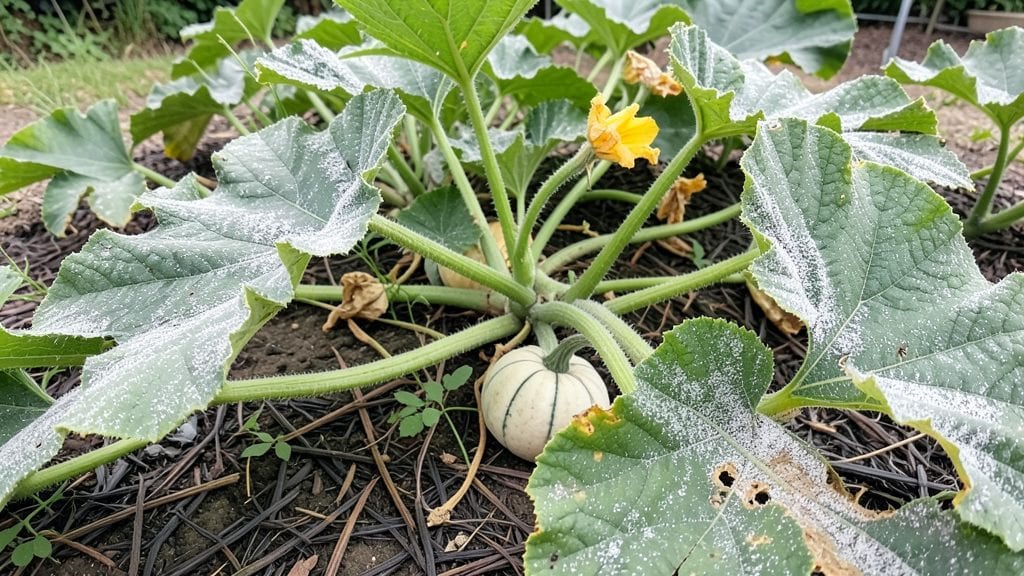
Powdery mildew on pumpkin plants turns those broad, glossy leaves into ghostly white dust within days—something I learned the hard way after my prized pie pumpkins started looking like they’d been sprinkled with flour. 🌿 The good news?
This fungal foe responds to simple, organic fixes before it chokes your vines. I’ve saved multiple harvests using just three targeted steps, and I’ll show you exactly how.
First, you’ll need to spot the problem early: those telltale white patches start on the undersides of leaves, then spread like powdered sugar. The real damage? It weakens vines so they can’t support heavy fruit—imagine your pumpkins rotting on the vine because the plant gave up.
My secret weapon? A mix of baking soda, dish soap, and water sprayed directly on the leaves (yes, the kitchen kind works). It’s not magic—it’s science.
Within 7-10 days of consistent treatment, you’ll see new growth pushing out clean and green. The key is prevention after the cure: space plants for airflow, water at the base (never overhead), and rotate crops next season.
I’ve kept my pumpkins thriving for three years using this exact routine, and the difference between a struggling patch and a bountiful one is shocking.
Works for squash, cucumbers, and melons too—just adjust the spray frequency based on humidity. Let’s get those vines back to their full, healthy selves before the mildew wins.
The Hidden Triggers Behind Fungal Outbreaks
Powdery mildew isn’t just a random nuisance—it’s a highly predictable fungal party, crashing your pumpkin patch when conditions hit just right. Understanding the root causes helps you outsmart the problem before it spreads like confetti in a windstorm.
Let’s break down the science behind why your pumpkin leaves look like they’ve been dusted with flour.
Powdery mildew thrives in stagnant, moist air, turning your pumpkin plants into a fungal buffet. Here’s why:
- High humidity (70%+): The fungus Erysiphe cichoracearum (the usual culprit) germinates best in damp conditions. Think of it like a sponge—when air is saturated, spores land, stick, and multiply on leaf surfaces.
- Poor ventilation: Crowded plants or dense foliage trap humidity near leaves, creating a microclimate perfect for mildew. Without airflow, spores can’t dry out and keep spreading.
- Morning dew: While dew itself isn’t the issue, if it lingers until midday (especially in shaded areas), it extends the fungus’s prime time to infect.
Actionable fix: Space plants 3–4 feet apart, prune for airflow, and water early in the day so leaves dry by sunset.
Pumpkins crave sunlight, and when they don’t get enough, their defenses weaken—making them prime targets for mildew. Science explains:
- Weakened cuticles: Sunlight helps pumpkin leaves produce cutin, a waxy layer that repels fungi. Shade-starved leaves become thinner and more permeable, letting spores penetrate easily.
- Slower drying: Shaded leaves retain moisture longer, giving mildew spores more time to germinate.
- Stressed plants: Low light = less photosynthesis = less energy for resistance. Think of it like a runner with low glycogen—they’re vulnerable.
Actionable fix: Ensure pumpkins get 6–8 hours of direct sun daily. If growing in containers, move them to sunnier spots or use reflective mulch to bounce light onto undersides.
Water is essential, but too much turns your soil into a fungal hotspot. Here’s how overwatering backfires:
| Issue | Why It Helps Mildew |
|---|---|
| Soggy soil | Encourages root rot | , weakening the plant’s ability to fight off pathogens.
| Wet foliage | Spraying leaves (especially at night) keeps them damp for 12+ hours, giving spores a 24-hour infection window. |
| Poor drainage | Trapped moisture in the soil releases fungal spores from the ground into the air, raining down on leaves. |
Actionable fix: Water deeply but infrequently—aim for 1–1.5 inches per week—and never wet leaves. Use drip irrigation or soaker hoses to deliver water directly to the roots.
Powdery mildew isn’t a fan of extremes—it loves moderate warmth. The sweet spot for outbreaks?
- 60–80°F (15–27°C): Ideal for spore germination and growth. Cooler nights (50–60°F) followed by warm days supercharge the fungus’s spread.
- Slow seasonal changes: If temps don’t fluctuate wildly, mildew gets a consistent buffet of happy-growing conditions.
- Nighttime dew + warm days: A classic combo that extends leaf wetness, giving spores more time to colonize.
Actionable fix: If your climate is perpetually mild, improve airflow (see above) and mulch with straw to regulate soil temps. In hot climates, provide afternoon shade cloth to cool leaves slightly.
Pro tip: 💡 Monitor your garden’s microclimate—use a hygrometer to track humidity and a thermometer to log temps. Mildew thrives in predictable patterns, and catching them early is your best defense!
Turn Around Fungal Foes Fast
Powdery mildew may feel like a stubborn foe, but with the right moves, you can save your pumpkin patch—and future harvests—without harsh chemicals. The key? Act quickly and tackle the root causes while giving your plants the support they need to bounce back.
Below, we map the most common triggers to practical fixes, plus prevention tips to keep mildew from crashing your garden party again.
If your pumpkins are elbowing each other for sunlight, poor airflow lets mildew spores throw a party. Fix it:
- 🔥 Thin your plants: Give each vine at least 3–4 feet of space (more if your variety sprawls). Snip or gently pull out extra stems, leaving only the healthiest ones.
- 🍳 Train vines upward: Use trellises or cages to elevate pumpkins off the ground. This dramatically improves airflow and dries foliage faster after watering.
- 👨🍳 Prune strategically: Trim dense or yellowing leaves to open the canopy. Focus on the bottom third of the plant, where humidity lingers.
Prevent next time: 💡 Start with the right spacing—check seed packets for mature plant size and plan accordingly. If you’re direct-sowing, thin seedlings early (when they’re 2–3 inches tall) to avoid stress later.
Mildew loves damp leaves, and overwatering or late-day irrigation turns your garden into a fungal buffet. Fix it:
- ⏰ Water at the right time: Morning is your best friend. Aim for early AM (6–9 AM) so leaves dry by sunset. Avoid evening watering—it keeps foliage wet overnight.
- 🥘 Water at the base: Use a soaker hose or drip irrigation to deliver water directly to the soil, not the leaves. If hand-watering, pour at the stem.
- 🔪 Improve drainage: Amend heavy soil with compost or perlite to prevent soggy roots. Raised beds or mounds can also help.
Prevent next time: 🌡️ Test your soil’s moisture before watering—stick your finger 1–2 inches into the soil. If it’s damp, wait. Mulch with straw or shredded leaves to retain moisture in the soil, not on leaves.
If mildew’s already taken hold, stop the spore spread and boost plant immunity with these no-chemical tactics:
- 🍎 Neem oil spray: Mix 1 tbsp neem oil + 1 tsp mild soap + 1 quart water. Spray affected leaves (and undersides!) every 5–7 days until mildew fades. Bonus: It also deters pests.
- 🥗 Baking soda remedy: Stir 1 tbsp baking soda + 1 tsp oil + 1 quart water. Add a drop of soap as a sticker. Spray directly on mildew (test a small leaf first). Repeat every 7–10 days.
- ✨ Milk spray (yes, really!): Use 1 part milk to 9 parts water. The fat and proteins disrupt fungal growth. Spray every 3–4 days for 2 weeks. Pro tip: Use raw or whole milk for best results.
Prevent next time: 🎯 Rotate treatments to avoid resistance. And clean up debris—remove fallen leaves and old vines after harvest to starve overwintering spores.
Stressed pumpkins are easy targets. Give them a fighting chance with:
- 💪 Feed with compost tea: Brew 1 cup compost + 5 gallons water, steep for 24 hours, then strain. Use as a foliar spray or soil drench to boost immunity.
- 🥗 Add potassium-rich fertilizer: A banana peel tea (simmer peels in water for 30 mins, cool, and use as fertilizer) or a low-dose potassium supplement helps plants fight infections.
- 🌱 Encourage beneficial microbes: Sprinkle mycorrhizal fungi or beneficial bacteria (like Bacillus subtilis) on roots to crowd out pathogens.
Prevent next time: 🔥 Start with healthy soil. Test your soil’s pH (aim for 6.0–7.0) and amend with aged compost before planting. Healthy soil = healthy plants!
Remember: Consistency is key. Check your pumpkins daily for new mildew spots, and act at the first sign. With these fixes, your plants can shake off the fungal blues and keep growing—and tasting—like champions.
Frequently asked questions about white dust on pumpkin leaves
Why does my pumpkin plant have white powdery spots?
That white dust is powdery mildew, a fungal infection caused by Erysiphe cichoracearum. It thrives in humid conditions and spreads when spores land on damp leaves. The fungus weakens your plants by blocking sunlight to leaves, which reduces photosynthesis and fruit production. Check undersides of leaves first—they're often the first to show symptoms.
Can I still harvest pumpkins if they have mildew?
Yes, but focus on fruits that are already 75% mature (like pie pumpkins). The fungus doesn't directly infect the fruit, but heavily infected vines may produce smaller or misshapen pumpkins. Remove heavily mildewed leaves to redirect the plant's energy to fruit development. Prune aggressively to improve airflow and recovery.
Will homemade sprays really work against mildew?
A baking soda spray (1 tbsp baking soda + 1 tsp oil + 1 quart water) disrupts fungal growth. For faster results, combine it with neem oil (1 tbsp per quart). Spray both sides of leaves every 5-7 days until new growth appears. The key is consistency—mildew won't disappear overnight, but these organic treatments stop its spread.
How do I prevent mildew next growing season?
Start with proper spacing (3-4 feet between vines) and improved airflow. Use drip irrigation to keep leaves dry, and water early in the morning. Rotate crops annually to break the fungal cycle, and remove all plant debris after harvest. For extra protection, apply reflective mulch to bounce sunlight onto leaf undersides.
Is it too late to save my pumpkins if mildew is already spreading?
Not if you act fast! Immediately prune infected leaves (don't compost them—bag and discard). Apply a milk spray (1:9 milk-to-water ratio) every 3-4 days for 2 weeks. For severe cases, combine with copper fungicide as a last resort. With aggressive treatment, you can still salvage 50-70% of your crop and prevent total loss.