
Companion Plants
Transform your garden into a vibrant rainbow with these 10 colorful companion plants. Strategically pairing plants by hue not only creates stunning visual appeal but also boosts growth, deters pests, and maximizes space efficiency—perfect for small or large garden beds alike.
Red Marigolds with Green Basil
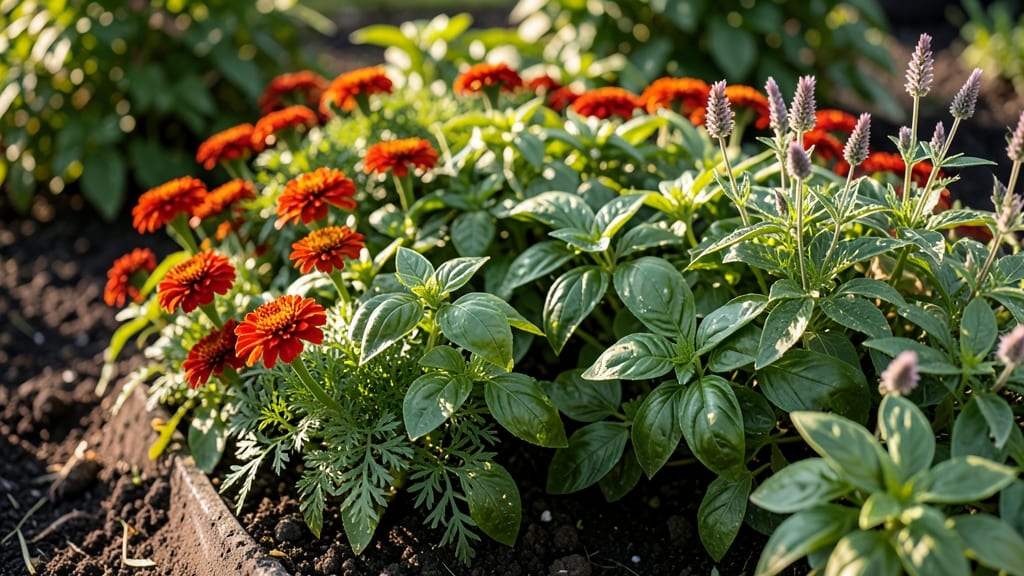
Want a low-maintenance way to add bold color and natural pest control to your garden? Pair red marigolds with green basil—this dynamic duo thrives in full sun and repels aphids, whiteflies, and even mosquitoes while keeping your herbs healthy.
Plant marigolds around the edges of your basil patch—their strong scent confuses pests, while their fiery red blooms create a striking contrast against basil’s glossy leaves. Both love well-draining soil and 6+ hours of sunlight daily, making them perfect for containers or in-ground beds. Snip basil leaves as needed, and the marigolds will keep flowering all season long.
This combo is especially great for urban gardeners or beginners—it’s hard to kill, pest-resistant, and adds instant curb appeal. Plus, you’ll get fresh basil for cooking while keeping your garden vibrant and thriving. 🌻
Orange Calendula with Purple Borage
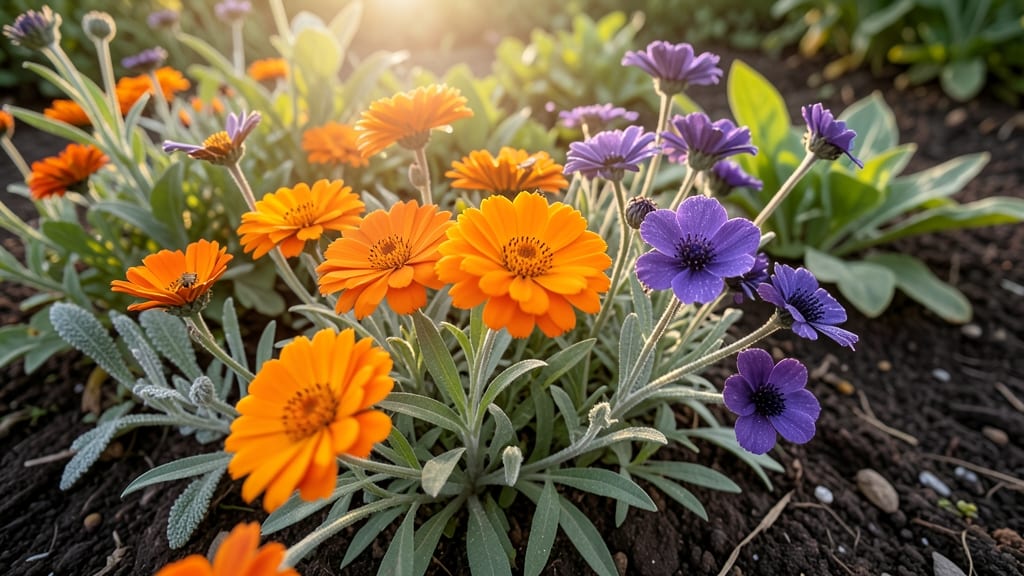
Want a vegetable garden that’s both stunning and productive? Pair orange calendula with purple borage for a double benefit: vibrant color and natural pest control. This dynamic duo thrives in warm climates, where calendula’s bright blooms lure bees and butterflies while borage’s edible flowers repel tomato hornworms—saving your crop without chemicals.
Start by planting calendula near the edges of your tomato beds, where its 6 hours of sun will encourage abundant blooms. Borage, with its striking star-shaped flowers, self-seeds easily, so let it spread naturally between rows. Both plants tolerate dry soil once established, making them low-maintenance additions to any sunny garden.
This pairing is perfect for home gardeners who love edible landscapes—borage’s flowers are delicious in salads, while calendula’s petals add a citrusy note to teas. It’s a win-win for beauty and function! 🌻
Yellow Coreopsis with Blue Lobelia
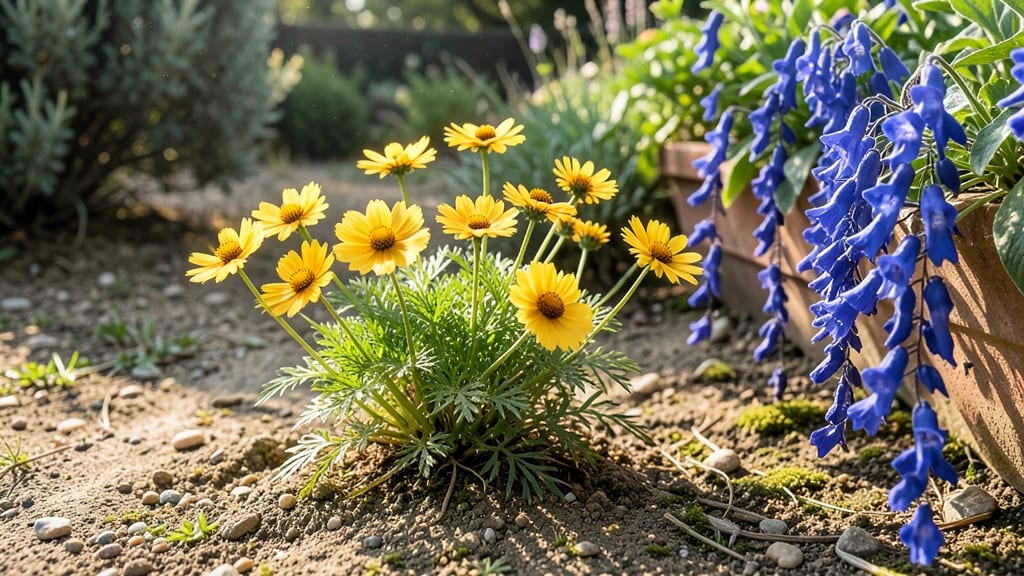
Want a low-maintenance pollinator magnet that thrives even in rocky or sandy soil? Pair coreopsis—with its cheerful golden-yellow daisies—with blue lobelia, whose trailing spikes create a stunning vertical contrast. This duo blooms from early summer through fall, offering nearly year-round color with minimal effort.
The coreopsis attracts bees and butterflies while tolerating drought and poor soil, making it ideal for sunny borders or hanging baskets. Plant lobelia at the front or edges to spill over containers, creating a cascading effect that softens sharp garden lines. Both plants prefer full sun (6+ hours daily) and thrive in well-draining soil, so they’re perfect for urban gardens or sloped areas where other plants might struggle.
This combination is especially great for beginner gardeners or those with less-than-ideal soil—just add compost at planting time and watch the pollinators flock! 🌻
Green Swiss Chard with Pink Strawberries
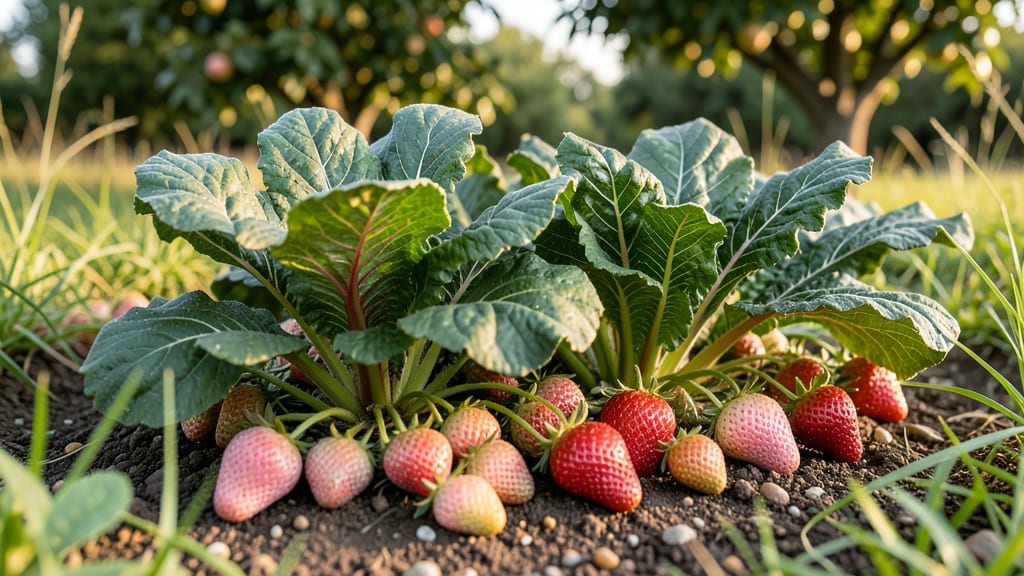
Want a garden that’s as delicious as it is stunning? Pair green Swiss chard with pink strawberries for a two-in-one harvest that’s both beautiful and productive. The chard’s broad, colorful stems provide natural shade for strawberries, keeping their soil cooler and reducing moisture loss—perfect for hot afternoons.
Plant Swiss chard along the north or east side of your strawberry bed to maximize shade benefits. The chard’s edible stems come in vibrant colors like pink, yellow, and white, adding visual depth to your garden while you harvest both. Strawberries thrive in this setup, producing sweeter fruit with less watering.
This pairing is ideal for small-space gardeners or urban containers, giving you a year-round edible rainbow with minimal effort. Plus, the chard’s deep roots help prevent weeds from competing with your strawberries. 🌻
Blue Delphinium with White Sweet Alyssum
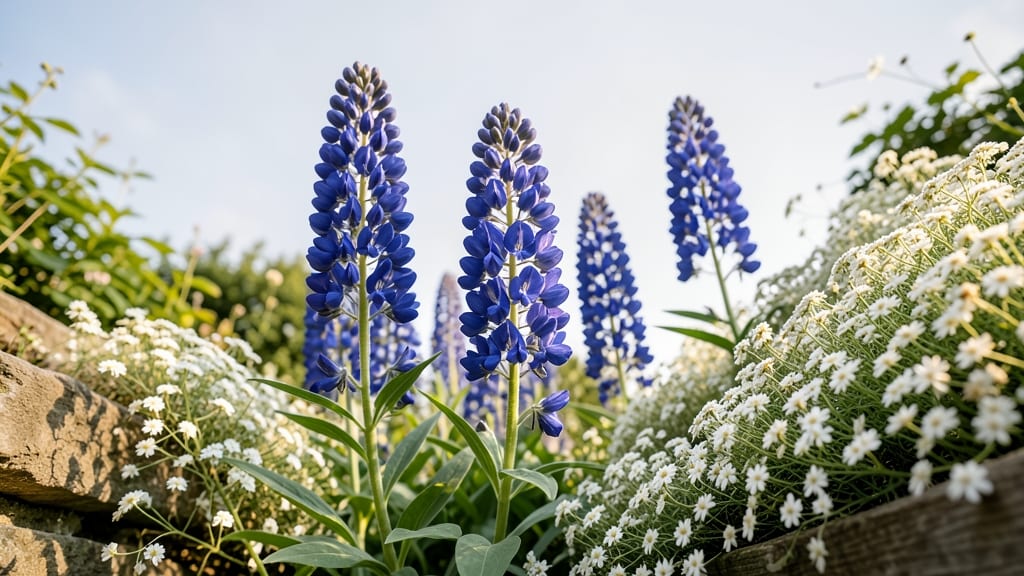
Cottage gardens crave charm, and this blue delphinium and white sweet alyssum pairing delivers both beauty and function. The towering delphinium spikes (3-5 feet tall) create vertical drama, while the low-growing alyssum spills over garden edges, filling gaps with its sweet fragrance.
Plant delphinium in well-draining soil with full sun to partial shade, spacing them 18-24 inches apart. Sweet alyssum thrives in the same conditions but prefers slightly more moisture. The alyssum’s tiny white blooms repel pests like aphids while attracting beneficial insects, creating a natural pest-control barrier around your delphinium’s striking blue flowers.
This duo is perfect for gardeners who love romantic, low-maintenance designs with year-round interest—delphinium’s foliage stays attractive even after blooms fade, while alyssum self-seeds for continuous color. 🌻
Indigo Blue Salvia with Red Geraniums
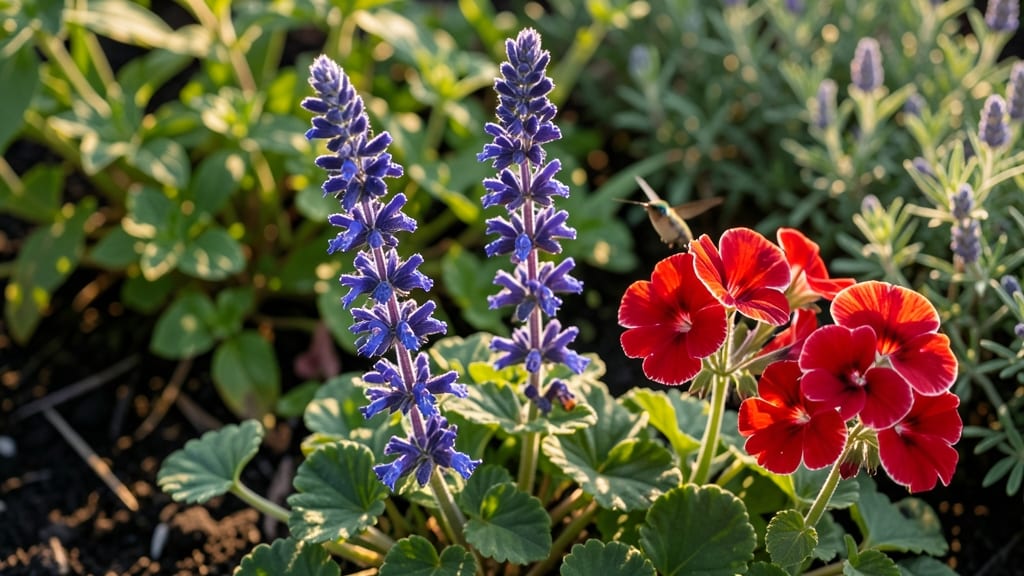
Skip the chemical repellents—this indigo blue salvia and red geranium duo keeps mosquitoes away naturally while creating a hummingbird magnet. The deep blue spikes of salvia release oils that deter flying pests, while geraniums’ bright red blooms act like neon signs for hummingbirds, creating a buzzing, bird-filled oasis.
Both thrive in full sun (6+ hours daily) and well-draining soil, making them perfect for sunny patios or pollinator gardens. Plant salvia in the back for height (2-3 feet tall) with geraniums cascading forward—their contrasting colors pop against gravel or mulch. Deadhead spent blooms to encourage continuous flowering from spring through fall.
This pairing is ideal for urban gardeners with limited space or anyone wanting a low-maintenance way to add color and function to their outdoor area. 🌟
Purple Cleome with Gold Zinnia
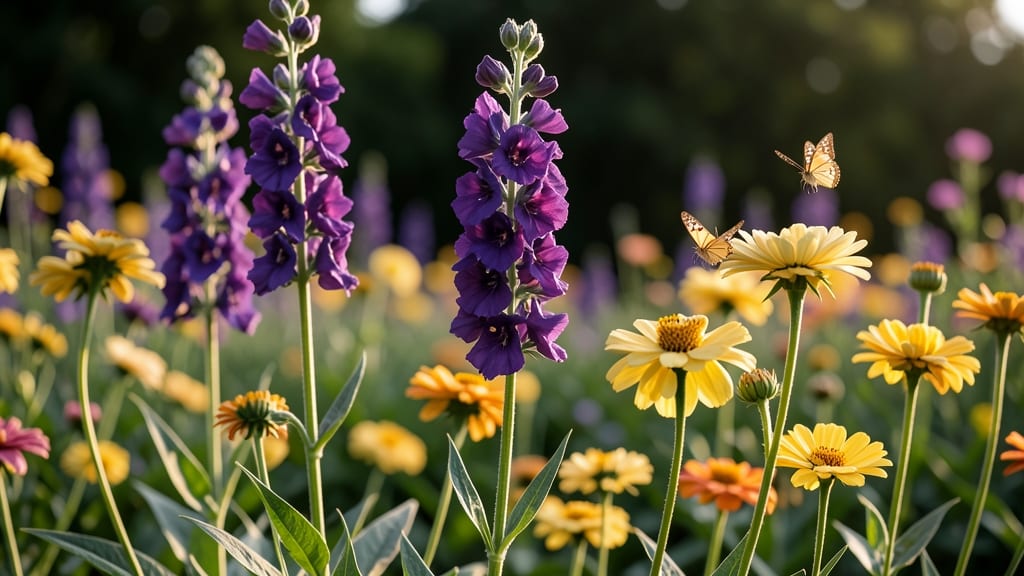
Want a garden that feels like a living art installation? Pair purple cleome with gold zinnias for a striking contrast that pops against any backdrop. These two plants create vertical drama with cleome’s towering, wand-like blooms while zinnias add a cheerful golden glow that butterflies can’t resist.
The cleome thrives in full sun and well-drained soil, reaching heights of 3-5 feet, while zinnias—also sun-lovers—prefer regular watering to keep their blooms abundant. Plant them together in late spring after the last frost for a summer-long show that’s perfect for cutting gardens or pollinator-friendly borders.
This duo is ideal for gardeners who love bold statements without fuss—just add water and watch your garden transform into a magnet for pollinators and admirers alike. 🌻
White Snapdragons with Lavender
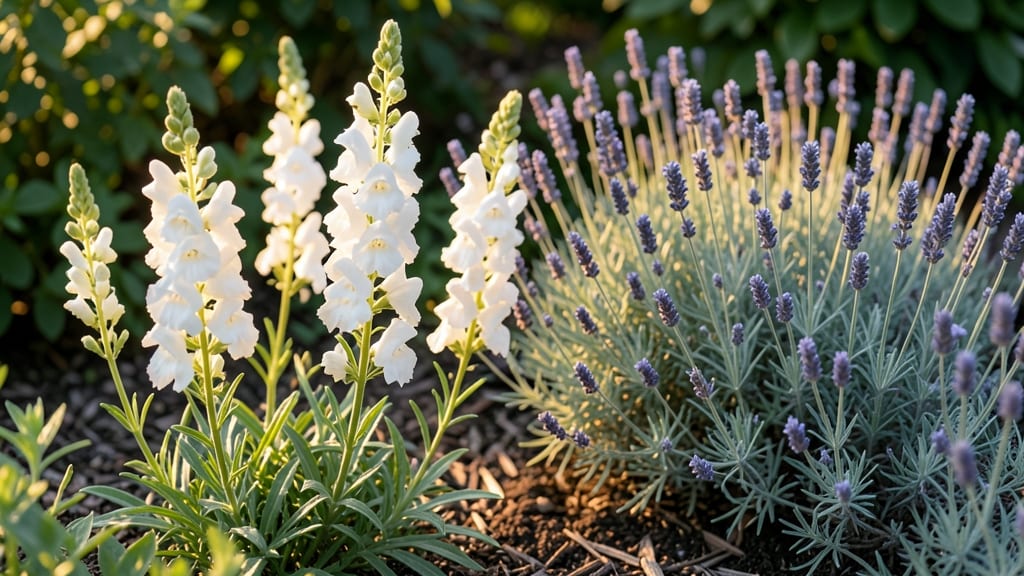
Looking for a fragrant, pest-repelling duo that adds elegance to your garden? White snapdragons and lavender create a striking contrast while working together to protect your plants naturally—no chemicals needed.
Snapdragons’ tall, white spikes release a scent that confuses cabbage moths, a common pest for brassicas like kale and cabbage. Meanwhile, lavender’s purple blooms emit oils that deter aphids and flea beetles while luring bees with their sweet fragrance. Plant them in full sun with well-draining soil, and watch their complementary colors brighten borders or herb gardens.
This pairing is perfect for gardeners who love low-maintenance yet high-impact plant combinations—ideal for cottage-style gardens or pollinator-friendly spaces where both beauty and function matter. 🌷
Pink Zinnias with Green Cucumbers
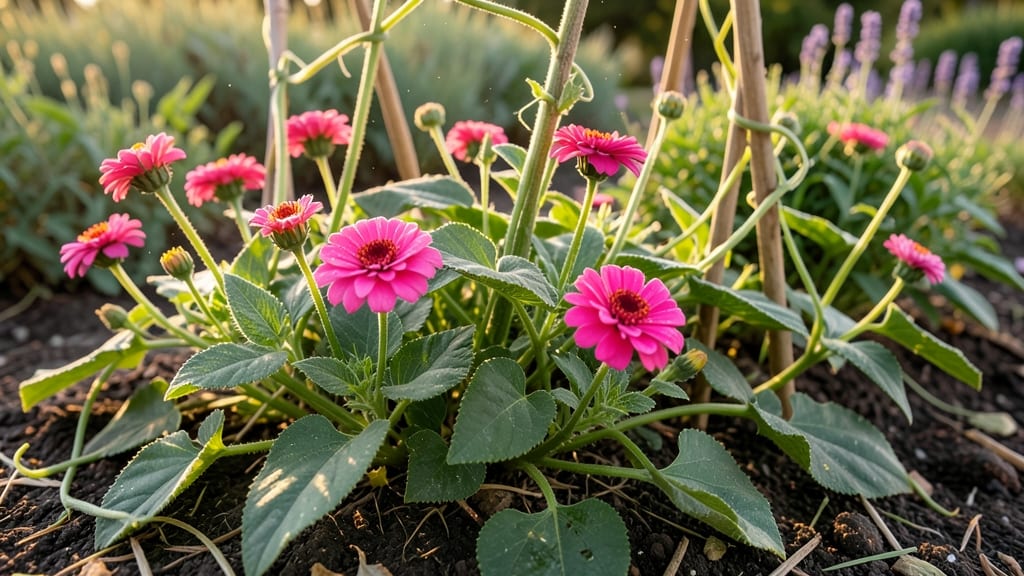
Turn your vegetable patch into a pollinator magnet while boosting your cucumber harvest with this vibrant duo. Pink zinnias aren’t just pretty—they’re powerhouses that lure bees, butterflies, and hummingbirds straight to your green cucumber vines, increasing fruit set and size.
Plant zinnias around the perimeter of your cucumber patch, where their bright blooms will catch pollinators’ attention. These sun-loving annuals thrive in well-drained soil and tolerate heat, making them perfect for summer gardens. For containers, choose compact varieties like ‘Thumbelina’ zinnias—they’ll spill over edges while protecting cucumbers from pests like cucumber beetles.
This pairing is a game-changer for urban gardeners or small-space growers who want both beauty and bounty. The pink-and-green contrast adds instant curb appeal while ensuring your cucumbers get the extra pollination boost they crave. 🌻
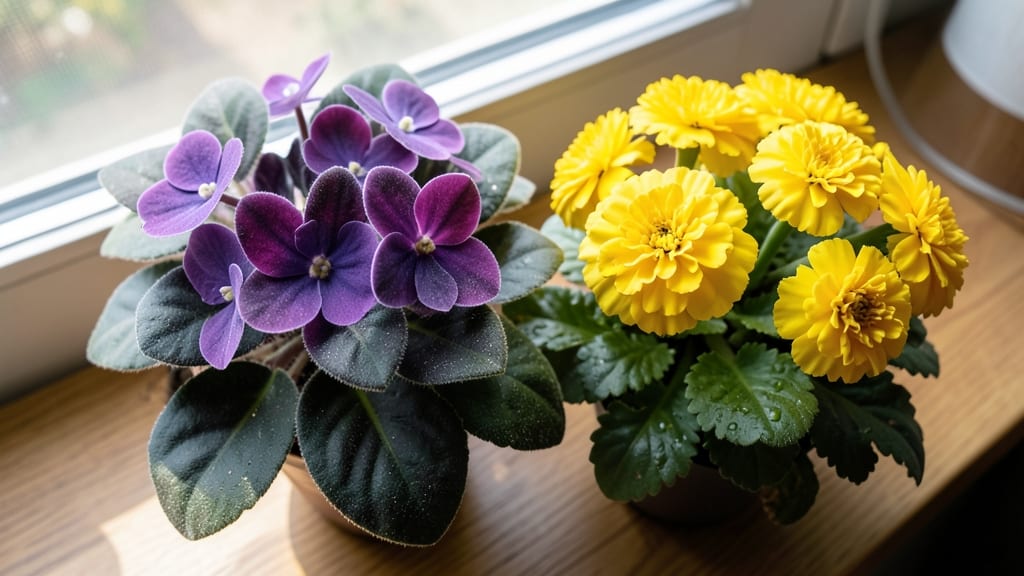
Violet African Violets with Yellow Marigolds

Bring the rainbow indoors with this unexpected duo: violet African violets paired with yellow marigolds. While violets flourish in bright, indirect light (like east-facing windows), marigolds’ pest-repelling properties create a natural defense system—ideal for indoor spaces where pests lurk.
Plant African violets in well-draining soil and keep them slightly moist, while marigolds thrive in partial shade (4-6 hours of light). The contrast between their velvety purple blooms and marigolds’ cheerful yellow creates a striking visual pop. This combo works beautifully in 6-inch pots or as a two-tiered display on a sunny windowsill.
Perfect for urban gardeners or anyone with limited outdoor space, this pairing delivers year-round color without the fuss of seasonal planting. The marigolds’ scent alone deters common houseplant pests like fungus gnats, making it a low-maintenance win. ✨