
Watering
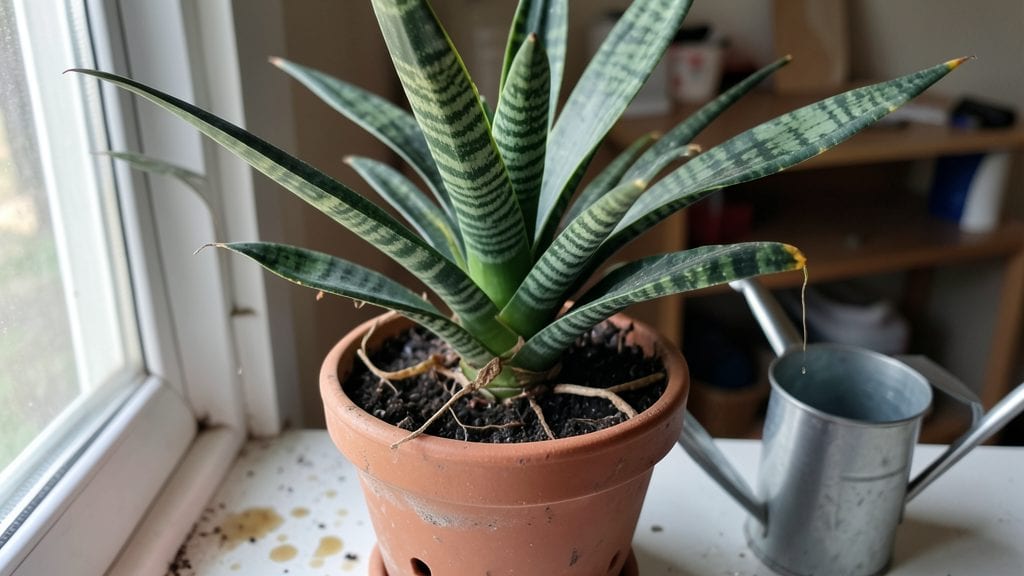
Even the hardiest snake plant overwatered can turn into a sad, mushy mess—but here’s how to rescue yours before it’s too late. 🌱 I’ve revived more soggy snake plants than I’d like to admit, and the key is catching the problem early before root rot takes over.
The first warning sign? Yellow leaves that feel mushy when you touch them, or stems that wobble like they’re filled with jelly instead of strength.
Here’s the hard truth: snake plants thrive on neglect, not regular watering. Most people overdo it because they assume "more water = happier plant," but these tough succulents store moisture in their leaves.
A quick soil check with your finger—if the top 2-3 inches are damp, wait another week—could save your plant from a slow, soggy death.
When you act fast, you can nurse a struggling snake plant back to health. Trim the rotten roots, repot it in fast-draining soil, and give it a bright spot away from direct sun.
Within weeks, you’ll see crisp, upright leaves pushing through, and the plant will bounce back stronger than ever—if you commit to the "almost dry before watering" rule.
This rescue method works for both potted plants and those in containers, whether you’re dealing with a 6-inch starter or a 3-foot floor plant. The secret?
Patience and a strict watering schedule. Once your snake plant recovers, it’ll reward you with years of low-maintenance greenery—if you let it dry out properly between drinks.
Common Causes Of Overwatering
Overwatering your snake plant (Sansevieria trifasciata) can turn a resilient houseplant into a sad, mushy mess—often due to well-intentioned (but misguided) care habits. Let’s break down the real reasons this happens, so you can avoid repeating the same mistakes.
Snake plants are succulents, meaning they store water in their thick, fleshy leaves. Unlike thirsty tropical plants, they thrive on neglect—not frequent watering. Here’s why this leads to overwatering:
- Misjudging the soil’s dryness: Most soils retain moisture longer than expected, especially in pots with poor drainage. Stick your finger 2–3 inches deep into the soil—if it’s damp, wait.
If it’s bone-dry, it’s safe to water. - Assuming "more water = happier plant": Many gardeners (especially newbies) water on a schedule (e.g., every week) without checking soil conditions.
Snake plants don’t need a routine—they need conditions-based care. - Overestimating evaporation rates: Humid environments or small pots slow drainage, trapping excess water. Solution: Use terracotta pots (which dry faster) or add perlite/pumice to improve aeration.
💡 Pro Tip: If your snake plant is in a nursery pot with no drainage holes, it’s a ticking time bomb for root rot. Repot immediately!
Even if you water correctly, bad drainage turns your pot into a swamp. Here’s how it backfires:
| Problem | Why It Happens | Fix It Fast |
|---|---|---|
| No drainage holes | Water pools at the bottom, suffocating roots. | Drill holes in the pot or repot ASAP with fresh, gritty soil. |
| Compacted or clay-heavy soil | Holds water like a sponge, cutting off oxygen to roots. | Mix in perlite, orchid bark, or coarse sand (20–30% of the soil mix). |
| Tray water buildup | Emptying the saucer isn’t enough—residual moisture seeps back in. | Drain excess water 10–15 mins after watering and never let it sit. |
🌡️ Warning: If your plant’s pot feels heavy when dry, it’s a red flag—your soil mix is too dense.
Not all homes are created equal—and neither are snake plant needs. These hidden culprits mess with moisture levels:
- Low light = slower drying: Snake plants in dim corners (like bathrooms or north-facing windows) dry out much slower than those in bright, indirect light. Adjust your watering frequency—wait 1–2 extra weeks before watering in shady spots. - Humidity spikes: Humid climates (or summer AC use) slow evaporation, keeping soil wet longer.
Use a hygrometer to monitor humidity—aim for 40–50% for optimal drying. - Seasonal changes: Winter = metabolism slowdown = less water needed. Cut watering in half during cooler months.
✨ Genius Hack: Place your snake plant near a sunny window (but not in direct sun) to speed up drying—less watering needed!
Snake plants don’t wilt dramatically like other plants—they yellow, soften, or develop mushy leaves after the damage is done. Here’s how to spot false signals:
- Drooping leaves? More likely underwatering or root bound—not overwatering.
Gently tug the plant: if it slides out easily, it’s root-bound (needs a bigger pot). - Brown, crispy tips? Usually fluoride in tap water (common in city water) or low humidity—not overwatering. - Yellowing leaves? Classic overwatering sign—but it’s often too late by the time you notice. Prevent it by checking soil moisture before watering.
🔥 Emergency Check: If your plant’s leaves feel slimy or squishy, root rot has set in. Act now (see our rescue guide for next steps).
Not all water is created equal—and some types actively harm your snake plant:
- Tap water with chlorine/fluoride: Builds up in soil, causing leaf burn and root stress. Fix: Let tap water sit 24 hours before using or use filtered/rainwater.
- Cold water: Shock to roots, slowing absorption. Always use room-temperature water.
- Distilled or soft water: Lacks minerals, leading to nutrient deficiencies over time. Balance it with a diluted fertilizer (½ strength) every 2–3 months.
💡 Bonus Tip: If your water has a strong chemical smell, boil it for 5 minutes to remove chlorine before watering.
Revive Your Snake Plant Now
If your snake plant is showing signs of overwatering, don’t panic—there’s still hope! The key is to act quickly and methodically. Below, we’ll break down the most common causes of overwatering and the step-by-step fixes to save your plant. Prevention tips will also help you avoid future watering woes.
If your snake plant’s roots are mushy, black, or smelly, root rot has set in. This is the most critical issue to address immediately.
🍳 Step 1: Remove the Plant Gently
- Carefully lift the snake plant from its pot. If it’s stuck, loosen the soil with your fingers or a small tool.
- Shake off excess soil to inspect the roots.
Healthy roots are firm and white or light tan, while rotten roots are dark, mushy, and may crumble.
👨🍳 Step 2: Trim the Damaged Roots
- Use sterilized scissors or pruning shears to cut away all black, mushy, or soft roots.
Snip healthy roots only if they’re attached to dead sections. - Pro Tip: 💡 If you’re unsure which roots to keep, err on the side of caution—it’s better to remove a little too much than leave rot behind.
🥘 Step 3: Disinfect the Roots
- Soak the remaining roots in a 1:10 hydrogen peroxide solution (3% hydrogen peroxide to water) for 10 minutes.
This helps kill remaining bacteria and fungi. - Alternative: 🌡️ Use a fungicide like copper fungicide or neem oil solution (2 tsp neem oil per quart of water) for a natural approach.
⏰ Step 4: Let It Dry Out
- Allow the roots to air-dry completely for 1–2 hours. This prevents further rot from moisture.
🌱 Step 5: Repot in Fresh Soil
- Choose a clean pot with drainage holes (terracotta is ideal).
If the old pot is salvageable, scrub it with soap and disinfect it. - Use a well-draining potting mix, like a blend of cactus/succulent soil, perlite, and orchid bark (50/30/20 ratio). - Plant the snake plant at the same depth as before, pressing the soil lightly around the roots.
Prevention is the best cure! Once your snake plant is back on track, follow these watering rules to keep it thriving.
💧 Water Only When Necessary
- Check the soil first: Stick your finger 2 inches into the soil. If it’s dry, water; if it’s damp, wait.
- Water deeply but infrequently: When you water, soak the soil until water drains from the bottom.
Empty the saucer afterward to prevent soggy roots.
🌡️ Use the Right Pot and Soil
- Drainage is non-negotiable: Avoid decorative pots without holes—use a cache pot if needed.
- Well-draining soil is a must: Mix in perlite, sand, or pumice to improve aeration.
🎯 Monitor Humidity and Light
- Snake plants thrive in bright, indirect light. Too little light slows growth, making them more susceptible to overwatering.
- Low humidity is ideal: These plants dislike excess moisture in the air, so avoid misting and ensure good airflow.
Once your snake plant is recovered, keep it happy with these pro tips:
- 🌱 Rotate the pot occasionally to ensure even light exposure.
- 🍃 Dust the leaves every few months to help with photosynthesis.
- 📅 Water every 2–4 weeks in winter (growth slows, so less water is needed).
- 🚫 Avoid fertilizing for 4–6 weeks after repotting to let the roots recover.
With these steps, your snake plant should bounce back stronger than ever. Remember, prevention is key—once you’ve mastered the art of underwatering, your snake plant will reward you with lush, vibrant growth for years to come! 🌿
Frequently asked questions
How do I know if my snake plant is overwatered vs. underwatered?
Check the leaves: overwatered plants have yellow, mushy leaves that feel soft when touched, while underwatered plants develop brown, crispy tips. Also, gently tug the plant—if it slides out easily, it’s likely root-bound (needs a bigger pot), not overwatered.
Can I save a snake plant with black, smelly roots?
Yes, but act fast! Trim all black/mushy roots with sterilized scissors, then repot in fresh, well-draining soil with perlite. Let it dry completely for 24 hours before watering again. If the rot is severe, propagate healthy cuttings to grow new plants.
Why does my snake plant keep getting overwatered in winter?
Winter slows growth, so your plant needs half the water it did in summer. Check soil moisture with your finger—wait until the top 3 inches are bone-dry before watering. Move it to a brighter spot to speed up drying.
Is it okay to water my snake plant when the soil is still slightly damp?
No—snake plants store water in their leaves, so they prefer dry soil between waterings. If the top 2 inches feel damp, wait 1-2 more weeks. Use terracotta pots to help soil dry faster.
How often should I fertilize a recovered snake plant?
Wait 4-6 weeks after repotting, then use a diluted succulent fertilizer (½ strength) every 2-3 months in spring/summer. Over-fertilizing can burn roots, so always water first to avoid salt buildup.