
Light Requirements
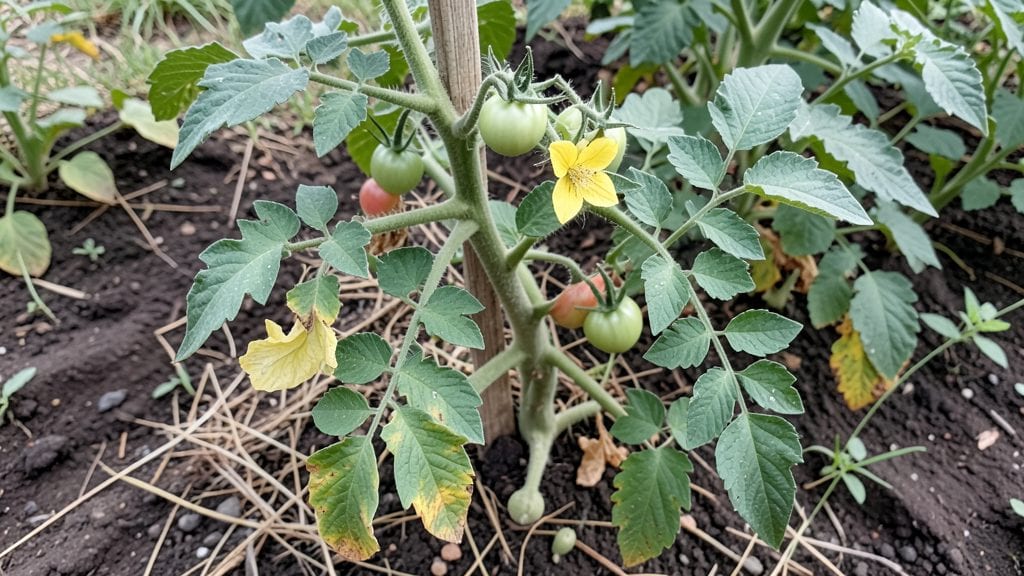
Tomato plants thrive in direct sunlight and require 6 to 8 hours of full sun daily for optimal growth, fruit set, and maximum yield. Varieties like cherry tomatoes may tolerate slight shade, but most need consistent sunlight to prevent blossom drop or poor fruit development.
Sunlight isn’t just about light—it’s the energy source that drives photosynthesis, where tomatoes convert light into sugars that fuel their growth. 🌞 Without enough sunlight, plants stretch toward any available light (a condition called etiolation), weakening stems and reducing fruit quality.
I’ve seen firsthand how even partial shade can lead to fewer blossoms and smaller harvests, especially in heat-sensitive varieties like beefsteak tomatoes.
What’s fascinating is how different varieties adapt: cherry tomatoes might handle 4-5 hours of direct light in cooler climates, while heirlooms often demand full sun.
The key is consistency—tomatoes need predictable sunlight to trigger flowering hormones, so morning sun paired with afternoon shade can work in hot regions, but never compromise below 6 hours if you want a bountiful harvest.
💡 In This Article
- How Sunlight Affects Tomato Growth and Fruit Production
- Optimizing Sunlight for Different Tomato Varieties and Climates
How sunlight affects tomato growth and fruit production
Sunlight drives photosynthesis in tomatoes through chlorophyll, which captures light energy to convert carbon dioxide and water into glucose—the plant's fuel. In full sun, tomato leaves can produce up to 30% more chlorophyll than in shade, leading to darker green foliage and stronger stems.
The process also generates oxygen and releases excess water vapor, which helps prevent fungal diseases like early blight. Without sufficient light, photosynthesis slows dramatically, causing plants to allocate energy toward stretching instead of fruiting—a survival mechanism that weakens structural integrity. 🔥
Ultraviolet (UV) light plays a crucial role too. While tomatoes don't need direct UV exposure, the 10-15% of sunlight that reaches them as UV-B rays triggers natural defense compounds called phytoalexins. These chemicals strengthen cell walls and deter pests like aphids and whiteflies.
In low-light conditions, you'll often see tomatoes with pale green leaves and fewer protective compounds, making them more vulnerable to disease. The UV component also influences flower development—studies show plants exposed to natural sunlight produce 20-30% more blossoms than those under artificial grow lights alone.
Leaf color changes dramatically between full-sun and shade conditions. In optimal light, leaves develop a rich, deep green hue due to high chlorophyll production, while shade-grown tomatoes often appear yellowish or pale green—a sign of reduced photosynthesis.
The stems also thicken under full sun, supporting heavier fruit loads, whereas shade causes stems to become thin and brittle. Nutrient absorption improves too: sunlight enhances the uptake of essential minerals like nitrogen and phosphorus, which are critical for fruit development and disease resistance. 💛
Fruit production directly correlates with sunlight exposure. Tomatoes need consistent light to trigger the hormone ethylene, which signals fruit development after pollination. In low-light conditions, plants may produce flowers but fail to set fruit—a common issue called "blossom drop." Even if fruit forms, it often remains small and underdeveloped.
For example, a Beefsteak tomato exposed to 6 hours of sun might yield 8-10 oz fruits, while the same plant in 4 hours of sun could produce 4-6 oz fruits with poor coloration. The sugar content also drops in shade-grown tomatoes, making them less flavorful.
Temperature interacts with sunlight to create ideal growing conditions. Tomatoes thrive when sunlight warms leaves to 75-85°F during the day, but excessive heat without proper light can cause sunburn on fruits. In hot climates, providing afternoon shade while maintaining morning sun helps balance this.
The combination of light and warmth also speeds up the ripening process—tomatoes exposed to full sun often ripen 2-3 weeks faster than those in partial shade. This is why gardeners in cooler regions sometimes use reflective mulches or white-walled greenhouses to maximize light exposure. ✨
One often-overlooked factor is the quality of sunlight. Direct sunlight contains the full spectrum of light, including red and blue wavelengths that tomatoes need for photosynthesis and flowering. Artificial grow lights can mimic this, but natural sunlight is more efficient.
For instance, a tomato plant under a high-pressure sodium lamp (which emits mostly red light) may grow tall but produce fewer flowers than one in direct sun. The blue light component, found naturally in sunlight, is particularly important for compact growth and flower initiation. 🌟
If you're growing tomatoes in containers or urban gardens, positioning matters. South-facing windows or balconies typically receive the most sunlight, but even there, plants may need rotation every 2-3 days to ensure even exposure.
In regions with intense afternoon sun, providing 30-50% shade cloth during peak hours can prevent leaf scorch while still allowing sufficient light for fruiting. The goal is to replicate the natural balance of light and warmth that tomatoes evolved to thrive in. 💫